
Casement Windows for Projects – Foshan Supplier
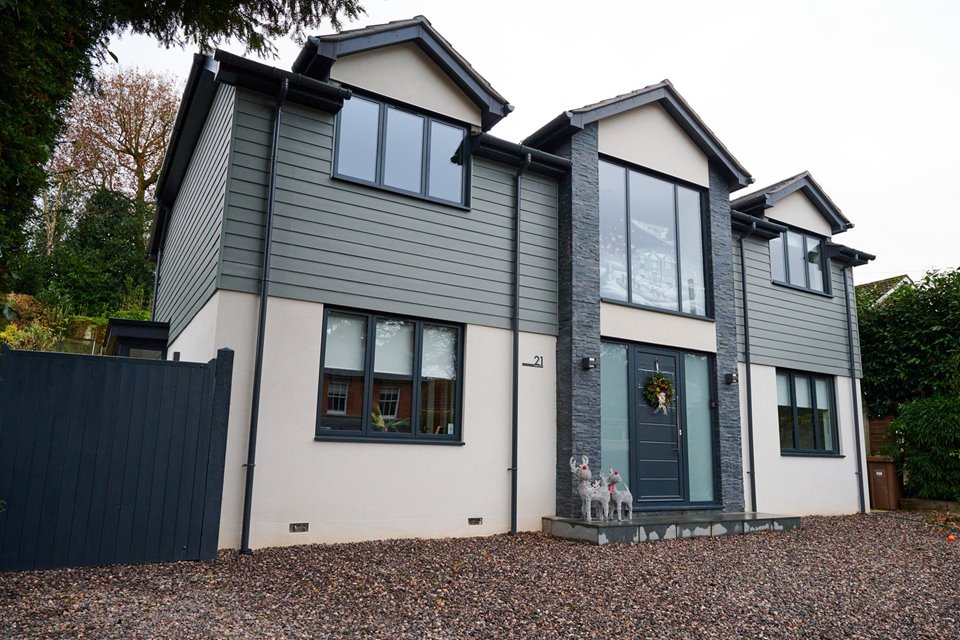


1. System Overview — Pressure Has a Direction, and a Seal Is a Spring That Relaxes
Two variables decide whether a casement window still performs in its fifteenth year, and neither of them appears on a quotation. The first is direction: wind pressure does not simply load a window, it loads it from one side, and for a side-hung sash the two directions have opposite consequences. Positive pressure on an outward-opening casement drives the sash into the frame and loads the gasket harder — the window seals better in a storm than it does at rest. Reverse that direction and the same sash is being pulled away from its seal line, with the load carried by the hinges and the lock points and the gasket doing nothing at all. Inward-opening casements reverse the whole picture, which is why hardware specified for one opening direction cannot be transplanted to the other without changing its duty. The second variable is time: an elastomeric gasket is a spring, and springs relax. The seal force a window is commissioned with is the highest it will ever have, and it decays through compression set, stress relaxation, thermal cycling and UV exposure — so air infiltration rises, acoustic performance falls and water penetration follows, all before anything looks wrong to an owner. This article covers the direction of pressure and what it asks of hinges, lock points and gaskets; the seal as a spring and the mechanisms by which it loses its memory; lock point count and sash stiffness as the means of holding the sash against the seal line; water management as two lines of defence with a drained cavity between; the thermal interface and the coldest line in the room; and the acoustic rating that decays with the gasket rather than with the glass.
Richocean manufactures thermally broken aluminium casement windows in Foshan, Guangdong — 6063-T6 frames and sashes with PA66GF25 polyamide thermal breaks, outward and inward opening side-hung formats, SS316 friction stay hinges and multi-point locking rated for their duty cycle, EPDM gaskets specified by compression set rather than by hardness alone, warm-edge spacers, laminated and toughened insulating units — for villas, apartments, hotels and commercial buildings across Europe, North America, the Middle East and Southeast Asia, each system documented with its air permeability class, watertightness class, wind resistance class, thermal transmittance, acoustic rating and hardware duty cycle.
2. The Direction of Pressure — What a Storm Asks of the Hinges, the Locks and the Gasket
Wind load on a window is not a number but a pair of numbers with opposite signs, and a side-hung sash responds to them differently. Positive pressure — wind pushing on the outside face — drives an outward-opening sash back into its frame, compressing the gasket further than the closed handle ever did. The load path in that case is short and benign: sash to gasket to frame to fixing to structure, with the hardware doing little. Negative pressure, suction, does the opposite: it pulls the outward-opening sash away from the frame, and now the entire load is carried by the friction stay hinges and the lock points, with the gasket unloaded and the seal line open. That is the governing case for outward-opening hardware, and it is why a friction stay is a rated load-bearing component rather than an accessory — on the EN 12210 wind resistance basis the sash must remain in its frame, must not be permanently deformed beyond its stated deflection limit, and must still open and close after the test. An inward-opening casement reverses the two cases: positive pressure now pulls the sash out of the frame toward the interior and loads the hinges and locks, while suction drives it into the gasket. Hardware selected for an outward-opening window and fitted to an inward-opening one is therefore not a conservative substitution; it is the wrong duty in both directions.
The consequences run through the whole specification. Lock point count and spacing are set by the suction case, because their job in that case is to hold the sash against the seal line and to keep the sash from bowing away from the frame between points — which makes lock spacing a stiffness question as much as a security one. Hinge selection is set by the same case, and the rated capacity has to cover the sash weight plus the wind suction on the sash area plus the friction of the stay at its fullest extension, with a margin for the additional load of a restrictor or a sudden gust on a corner elevation where local pressure coefficients are substantially higher than in the field. Restrictors and stay arms change the picture again: a restrictor that limits opening to a hundred millimetres also limits the lever arm the wind can act on, but it introduces a point load into the sash corner that an unrestricted hinge does not see. And an exposed corner elevation, a high floor or a coastal site has a different pressure regime from a sheltered courtyard, so the same window section may be correct on one elevation and underspecified on the next — which is why a window schedule is a per-elevation document with its exposure stated, rather than one product repeated around a building.
Two further direction-dependent effects are routinely missed. First, water: driven rain arrives with the positive pressure, so the water and the force that closes the seal arrive together on an outward-opening window and at different times on an inward-opening one — which changes where the water management has to work. Second, operating feel and long-term squareness: a sash that is repeatedly driven hard into its gasket by storm loading is being impact-loaded at its corners, and over thousands of cycles that is a fatigue input into the corner joint rather than a static one. A casement designed only for its own weight and its handle torque has not been designed for the load case that actually occurs every windy night.
3. The Seal Is a Spring — Compression Set, Stress Relaxation and the Twenty-Year Air Path
A gasket works by being compressed and pushing back, and the force it pushes back with is what seals the window. That force is not a property of the material alone but of the geometry and the compression: a gasket compressed to a stated percentage of its free height generates a reaction force per unit length, and the total seal force around a sash perimeter is that reaction integrated over the compressed length. Specify too little compression and the window leaks air from day one; specify too much and the handle torque rises, the hardware is loaded at every closing, the sash is pushed away from the lock points, and the gasket is compressed beyond the range where it can recover. The design window is therefore narrow, and it is defined by a compression range rather than by a hardness value — quoting a Shore A hardness without the compression percentage and the resulting reaction force has specified almost nothing.
Time then works against that force through three distinct mechanisms, and they are not the same thing. Compression set is the permanent deformation a gasket retains after being held compressed: a gasket with high compression set does not return to its original height when the sash opens, so its working compression — and therefore its reaction force — falls permanently. Stress relaxation is the decay of force at constant deformation: the gasket is still the same height, still filling the gap, but it is pushing less hard, which is why a window can look perfectly sealed and measure badly on an air permeability test. Thermal and UV ageing change the material itself — hardening and embrittling in heat and sunlight, softening and swelling where plasticisers migrate or where the gasket contacts an incompatible coating, sealant or cleaning agent. All three raise air infiltration over the life of the window, and on the EN 12207 basis the consequence is a class change: a window commissioned at one air permeability class may sit in a lower class fifteen years later with nothing visibly wrong, and the first evidence is usually an energy bill, a draught complaint at the lock side, or a dust line on the frame behind the gasket.
Material selection is where this is designed rather than discovered, and the criteria are not the ones usually compared. EPDM is the default for exterior window gaskets because of its ozone, UV and weathering resistance and its wide service temperature range, and its compression set behaviour at the specified compression is the number that matters — not its hardness, and not its price per metre. Thermoplastic elastomers offer easier extrusion, co-extrusion with a rigid carrier and welding at corners, but their compression set and their high-temperature behaviour have to be checked for the actual exposure, since a gasket that performs at a temperate climate’s summer temperature may take a permanent set inside a dark frame on a west elevation in a hot climate. Silicone has excellent temperature range and recovery, and its compatibility with the frame coating and with adjacent sealants has to be verified, because some silicone formulations stain or degrade coatings and some are incompatible with laminated glass edge seals. Foamed or hollow-section gaskets reduce closing force for a given seal line but reduce the compression available before bottoming out, so they need a tighter tolerance stack between sash and frame. Whatever the material, four details decide the outcome: corner treatment of the gasket — a butt joint at the sash corner is an air path, so moulded corners, welded corners or a continuous gasket run around the corner are specified rather than left to site; the gasket’s compatibility with the coating it touches; the compression range stated for the assembled tolerance stack; and a service expectation, since a gasket is a wear item with a replacement interval and a replacement method that does not require removing the glass or the sash from its hinges.
4. Lock Points and Sash Stiffness — Holding the Sash Against the Seal Line
Lock points are usually specified for security and fail at sealing. Their second job is structural, and on a large sash it is the governing one: between two lock points the sash is an unrestrained panel, and under wind suction it bows away from the frame, opening the gasket gap exactly where nothing is holding it. The seal line is only as continuous as the spacing between the points that press it closed, so lock spacing is a stiffness decision made against the sash size, the section’s moment of inertia, the design suction and the compression the gasket needs to seal. That is why a tall narrow sash and a wide low sash of the same area need different lock layouts, and why a hardware set copied from a smaller window onto a larger one produces a window that passes a security test and fails an air permeability test. The relationship is worth stating plainly: the deflection of the sash between lock points has to be small enough that the gasket remains inside its working compression range across the whole perimeter at the design load — a criterion that is checked rather than assumed, and one that a cam-and-keeper arrangement satisfies only if the cams are positioned to do it.
Cam geometry then decides two things at once: the closing force the handle has to generate and the residual compression the cam holds after closing. An eccentric cam draws the sash in as it turns, adding compression beyond what the gasket’s geometry alone provides — which is how a window achieves a tight seal line without an excessive handle torque, and how it maintains that compression as the gasket relaxes over the years. A cam with little eccentricity closes easily and holds little, so the window’s air performance depends entirely on the gasket’s initial force and therefore decays faster. The strike and keeper have to be positioned so the cam engages square rather than at an angle, because an angled engagement wears the cam, produces a clicking feel at the handle and loses compression at that point permanently. Handle torque is the user-facing consequence of all of this, and it is a specification item rather than a comfort nicety: a window that requires excessive force to close will be left ajar, and a window left ajar has no air, water or acoustic performance at all.
Security is the third requirement on the same hardware and it interacts with the other two. On the EN 1627 and PAS 24 bases, resistance class is a property of the whole window — sash section, corner joint, glazing, glazing retention, hinges, keepers, lock points and the frame fixing — not of the lock alone. A class is achieved by resisting the attack tools and times defined for it, which means the keepers have to be fixed into the reinforcement or the structural part of the frame rather than into a thin wall of an extrusion, the hinges have to resist levering with the sash closed as well as carrying it open, and the glazing has to be retained against being pushed out from the inside. Lock point count rises with class, but so does the requirement for the sash to stay square under attack load — which returns the design to the corner joint and to the sash’s own stiffness, and is why a security upgrade that changes only the lock and the keeper does not change the class. Where a restrictor is fitted for ventilation or child safety, it becomes part of the security argument too, since a window held open at a hundred millimetres is a window whose resistance class is whatever the restrictor’s fixings can deliver.
5. Water Management — Two Lines of Defence and the Cavity That Must Drain
A casement has two seal lines and the space between them, and the design assumption that makes the assembly work is that the outer line will be breached. Watertightness on the EN 12208 basis is rated by the method and the pressure at which water penetrates, and the ratings climb from static spray to dynamic spray to storm conditions — but no rating is a promise that the outer gasket is impermeable for the life of the building. It is a wear item, it is compressed and released thousands of times, it is exposed to UV and to whatever the rain carries, and on a windward elevation in a storm it is being loaded by positive pressure at the same moment it is being hit by driven rain. So the assembly is designed as a drained system: water that passes the outer line enters the cavity between the two seal lines, and the cavity has to be able to get rid of it through weeps or drainage slots that discharge to the exterior, with the inner line intact and dry. A window whose cavity has no drainage is not a window with a better seal; it is a window with a reservoir, and the reservoir finds the inner line eventually.
The pressure-equalisation argument then explains why some windows leak at low wind and others do not leak at high wind. Water is driven through a gap by a pressure difference across that gap, so the effective defence is to reduce the difference across the outer seal line by allowing the cavity behind it to equalise with the exterior through the weeps. That works only if the cavity is genuinely vented and the weeps are large enough and positioned so they do not block — which introduces the detail everyone forgets: a weep is also an opening for insects, dust and, on a coastal site, salt-laden spray, so it needs a baffled or screened path that still passes air. A weep fitted with a solid cover for aesthetics, or blocked by sealant squeezed out during installation, or blocked by paint on a refurbishment, converts a pressure-equalised drained cavity into a trapped one. The sill then has its own job: it must shed water clear of the frame and the wall below it, with a drip edge throwing the discharge away from the facade rather than letting it track back underneath, and with the end dams or upstands detailed so water cannot leave sideways into the frame-to-wall junction. That junction is the third element and the one that fails most often in service, because the window can be perfectly detailed and still leak where its perimeter seal meets the wall’s own water barrier.
Condensation and drainage interact in cold climates in a way that is easy to miss. A cavity that drains liquid rain also has to deal with the condensate from moist interior air that reaches the cold outer parts of the frame, so the drainage path is in service year-round rather than only in storms — and a blocked weep shows up in winter as ice inside the frame or as a frozen sash that will not open, rather than as a leak. Freeze-thaw in the cavity then does mechanical damage: water that cannot leave expands where it sits, which is how drainage failures become cracked corners, distorted sills and split gaskets. The drainage path is therefore a maintenance item with an inspection interval, and it belongs on the maintenance schedule alongside the gasket rather than being assumed permanent.
6. The Thermal Interface — The Coldest Line in the Room Is the Sash-to-Frame Joint
Thermal performance is quoted as Uw for the whole window, and that single number conceals three very different components: the glazing Ug, the frame Uf, and the linear thermal bridge at the glass edge where the spacer sits. The frame is usually the weakest of the three in a metal window, which is why the thermal break carries so much of the specification — a PA66GF25 polyamide break separates the interior and exterior aluminium, and its width, its geometry and the number of chambers in the section set the frame’s resistance. But the break only works if nothing else bridges it, and in a casement there are several things that try to. The hinges and the friction stay pass metal from the sash to the frame; the lock points and keepers do the same; the reinforcement inside a section can bypass the break if it is continuous; and the gasket line itself sits where the two halves of the section meet, so a poorly detailed joint becomes a conductive path around the whole perimeter. Each of those is a local thermal bridge with its own linear value, and together they decide whether a window with an excellent Ug performs as a good window or as an average one.
The glass edge is the second interface and it is the one that produces visible problems. The spacer between the panes of an insulating unit is a thermal bridge across the unit’s own perimeter, which is why a warm-edge spacer materially improves not only the calculated Uw but the actual inner surface temperature at the glass edge — and it is that surface temperature, not the U-value, that decides whether condensation forms on a winter morning. The relevant measure is the surface temperature factor, on the ISO 10211 and EN ISO 10077 bases, which compares the internal surface temperature to the indoor and outdoor air temperatures; below a threshold set by the interior humidity the surface condenses, and the coldest point on a window is normally the glass edge and the sash corner rather than the centre of the pane. That is why condensation appears first at the perimeter and in the corners, and why the answer is a warm-edge spacer plus a break in the frame plus reduced interior humidity — not a better coating in the middle of the glass. Persistent condensation at the frame is not cosmetic: it wets the gasket, sits in the corner joint, feeds mould on the adjacent wall and, on the interior timber or coating, degrades the finish.
Three consequences follow that belong in the specification rather than in a marketing table. First, the thermal break has to be continuous around the whole sash and frame perimeter, including at the corners, where the joint method determines whether the break is maintained or interrupted — a corner assembled in a way that leaves aluminium-to-aluminium contact has created a bridge at the exact point where the surface is already coldest. Second, the insulating unit’s own durability is a thermal question: the spacer carries the desiccant that keeps the cavity dry, so a spacer whose primary and secondary seals fail lets moisture in, the unit fogs, and its Ug degrades permanently — which is why the edge seal and the desiccant capacity are specified alongside the coating. Third, solar gain and thermal stress have to be checked on large panes and on units with high-absorption coatings, since differential heating between the edge and the centre of a pane is a glass breakage mechanism rather than a comfort issue, and on the ASTM E1300 basis the glass thickness, the aspect ratio and the exposure together decide whether a build-up is adequate for the load and the stress it will see.
7. Acoustics — A Laboratory Rating That Decays With the Gasket, Not With the Glass
A window’s sound insulation is quoted as a single-number rating derived from a laboratory measurement on the EN ISO 10140 and EN ISO 717-1 bases, and the number is honest about what was measured: a sealed, new, correctly installed assembly. In service the window loses acoustic performance through paths that have nothing to do with the glass, and the largest of them is the same gasket discussed in section 3. Airborne sound travels through whatever gap exists, so a seal line that has lost its compression force through relaxation and compression set becomes an acoustic leak long before it becomes a visible draught — the decay in air tightness and the decay in sound insulation are the same physical event measured twice. That is why a window specified for a noisy street has to be specified with its long-term seal performance and not only with its initial rating, and why the acoustic argument for a good gasket is stronger than the thermal one: an air leakage path that costs a few percent of energy costs a great deal more of the sound reduction, because sound transmission through a slot is disproportionately effective.
The glass build-up then sets the ceiling, and it is governed by two effects rather than one. Mass improves transmission loss at most frequencies, which is the intuitive part. The non-intuitive part is the mass-air-mass resonance of an insulating unit: two panes separated by a gas cavity behave as a resonant system whose resonance frequency depends on the pane masses and the cavity width, and at that frequency the unit’s insulation drops sharply regardless of how heavy the panes are. Widening the cavity moves the resonance lower, adding mass moves it higher, and using two panes of different thickness moves the two panes’ own coincidence effects apart so they do not reinforce each other — which is why an asymmetric build-up usually outperforms a symmetric one of the same total weight. A laminated pane with an acoustic interlayer adds damping at the frequencies where a monolithic pane of the same mass would resonate, and it is the standard answer where the source spectrum is dominated by traffic noise. None of this can be bought back by a heavier unit if the cavity width, the coating and the edge seal have already set a resonance in the frequency band that matters, so the acoustic specification starts from the measured source spectrum at the site rather than from a target number.
Flanking closes the acoustic argument, and it is where installations fail rather than products. Sound reaches the interior around the window as well as through it: through the perimeter joint between frame and wall if that joint is filled with a rigid material that transmits rather than sealed with an acoustic-compatible fill, through a continuous rigid connection between the frame and the structure that bypasses the wall’s own insulation, and through the wall itself where a reveal liner or a plaster return creates a solid bridge. The frame-to-wall junction therefore has two requirements that pull against each other — it must be weathertight and drained, and it must not be a rigid acoustic or thermal bridge — and resolving both needs a detailed junction with the right materials in the right order rather than a single expanding foam applied on site. Where a casement is paired with a ventilation strategy, the acoustic path through an open or restricted window dominates everything else: an acoustically excellent window that has to be opened for ventilation on a noisy street has an acoustic performance equal to an open hole, which is why mechanical ventilation with an acoustic terminal, or an acoustic vent integrated into the window, is often the correct answer rather than a better glass build-up.
8. Performance Envelope — What a Casement Is Rated Against
| Property | Standard | Design Basis |
|---|---|---|
| Air permeability | EN 12207 basis | Set by gasket compression force and lock point spacing; a class can be lost in service as the gasket relaxes |
| Watertightness | EN 12208 basis | Rated by method and pressure at penetration; outer line assumed breached, cavity drained to the exterior |
| Wind resistance | EN 12210 basis | Suction governs outward-opening hardware; corner and edge zones see higher local pressures than the field |
| Sash deflection | Stated limit for the section | Deflection between lock points must keep the gasket inside its working compression range |
| Mechanical durability | EN 12400 basis | Duty cycles for hinges, stays and locks, plus the repeated storm-load input into the corner joint |
| Thermal transmittance | Uw on EN ISO 10077 basis | Ug plus Uf plus the glass-edge linear bridge; the break must stay continuous at the corners |
| Surface temperature factor | fRsi on ISO 10211 basis | Coldest point is the glass edge and the sash corner, not the pane centre; sets condensation risk |
| Acoustic rating | EN ISO 10140 / 717-1 basis | Measured on a sealed new assembly; decays with gasket force and with flanking at the perimeter |
| Security class | EN 1627 / PAS 24 basis | A property of the whole window: keeper fixing, glazing retention, hinges and sash squareness included |
| Compression set | Stated at compression and temperature | Permanent deformation reduces working compression, so seal force falls permanently |
| Stress relaxation | Force decay at constant deformation | A window can look perfectly sealed and measure badly on an air permeability test |
| Insulating unit durability | Edge seal and desiccant capacity | A failed spacer seal admits moisture, fogs the cavity and degrades Ug permanently |
| Glass strength | ASTM E1300 basis | Thickness, aspect ratio and exposure; differential edge-to-centre heating is a breakage mechanism |
| Safety glazing | EN 12600 basis | Class stated for the assembly where a fall or impact risk exists, including at low sills |
| Hardware corrosion | ISO 9227 salt spray | SS316 at C5-M; hinges and stays are load-bearing components, not decorative fittings |
9. Gasket and Seal Materials Compared
| Aspect | EPDM | Thermoplastic TPE | Silicone | Foamed / Hollow Section |
|---|---|---|---|---|
| Weather and ozone resistance | Excellent; the default for exterior gaskets | Good, formulation dependent | Excellent across the widest range | Depends on the base material |
| Service temperature range | Wide | Narrower; check the hot-climate upper limit | Widest | Follows the base material |
| Compression set behaviour | The specified value at the stated compression is what matters, not hardness | Can take a permanent set in a hot dark frame on a west elevation | Very good recovery | Lower closing force for a given seal line, less compression available before bottoming out |
| Corner treatment | Moulded corners or a continuous run; a butt joint is an air path | Weldable at corners, co-extrudable with a rigid carrier | Moulded or jointed; verify the joint method | Corner detail critical; a compressed foam corner loses force fastest |
| Compatibility | Verify against the frame coating and adjacent sealants | Generally good; check plasticiser migration | Some formulations stain coatings or affect laminated glass edge seals | As the base material |
| Closing force | Set by compression percentage and section geometry | Stiffer sections raise handle torque | Low force for a given compression | Lowest; needs a tighter sash-to-frame tolerance stack |
| Service expectation | A wear item with a replacement interval and a method that keeps the glass in place | Replacement easier where co-extruded with a carrier | Longest interval; costlier per metre | Shortest under high compression cycling |
| Best suited to | General exterior casement duty across most climates | High-volume extrusion with welded corners, temperate exposure | Extreme temperature ranges, long-life specifications | Large sashes where handle torque must stay low |
10. Technical FAQ
Because a gasket only seals if it is compressed inside its working range, and at the lock side three separate things can prevent that. First, the tolerance stack: the reaction force depends on the compression percentage, which depends on the gap the assembled sash and frame actually leave — so a new gasket in a sash that has dropped on its hinges, or in a frame that is out of square from installation, may be compressed too little at one corner and too much at another. A window whose sash is not square cannot be sealed by any gasket, and a dropped sash is the most common cause of a draught that follows the lock side rather than the hinge side. Second, lock point spacing: between two lock points the sash is an unrestrained panel that bows away from the frame under wind load, so the gasket gap opens exactly where nothing is holding it closed — a tall sash with lock points only at top and bottom has a long unsupported middle, and that middle is where the draught is. Third, cam geometry and engagement: an eccentric cam draws the sash in and holds residual compression after closing, while a cam with little eccentricity closes easily and holds little, and a keeper positioned so the cam engages at an angle rather than square wears and loses that point’s compression permanently. Check also the corner treatment of the gasket itself — a butt joint at the sash corner is an air path no amount of new material elsewhere will close, which is why moulded corners, welded corners or a continuous run around the corner are specified rather than left to site.
Neither is better in the abstract, because the two directions reverse which load case governs. Wind load is a pair of numbers with opposite signs. On an outward-opening casement, positive pressure drives the sash back into the frame and loads the gasket harder — the window seals better in a storm than at rest — while suction pulls the sash away from the seal line and puts the entire load onto the friction stay hinges and the lock points, with the gasket doing nothing. So suction is the governing case for outward-opening hardware, and it is why a friction stay is a rated load-bearing component rather than an accessory: on the EN 12210 basis the sash must stay in its frame, must not exceed its stated deflection limit, and must still open and close afterwards. On an inward-opening casement the cases swap — positive pressure now pulls the sash toward the interior and loads the hinges and locks, while suction drives it into the gasket. Hardware selected for one direction and fitted to the other is therefore not a conservative substitution; it is the wrong duty in both directions. Two further consequences follow. Water: driven rain arrives with the positive pressure, so on an outward-opening window the water and the force that closes the seal arrive together, whereas on an inward-opening window they arrive at different times and the drainage strategy has to work in a different sequence. And squareness over time: a sash repeatedly driven hard into its gasket by storm loading is being impact-loaded at its corners, which over thousands of cycles is a fatigue input into the corner joint rather than a static one — a window designed only for its own weight and handle torque has not been designed for the load case that occurs every windy night. Where a restrictor is fitted, note that it limits the lever arm the wind can act on but introduces a point load into the sash corner that an unrestricted hinge never sees.
Usually not the glass — the location of the condensation is the diagnostic, and it points at the perimeter rather than at the pane. What matters is not the U-value but the internal surface temperature, expressed as the surface temperature factor on the ISO 10211 basis: below a threshold set by the interior humidity, the surface condenses. The coldest point on a window is normally the glass edge and the sash corner, not the centre of the pane, which is exactly why the wet line appears there first. The glass edge is cold because the spacer between the panes is a thermal bridge across the insulating unit’s own perimeter, so a warm-edge spacer improves the actual inner surface temperature at the edge rather than only the calculated Uw. The corner is cold because that is where the frame’s thermal break is most easily interrupted — a corner assembled in a way that leaves aluminium-to-aluminium contact has created a bridge at the point where the surface is already coldest, and a PA66GF25 polyamide break only works if nothing else bypasses it, including hinges, stays, keepers and any continuous reinforcement inside the section. The third input is the interior air itself: the threshold moves with humidity, so the same window condenses in a house with high internal moisture load and does not condense next door. Note also that this is not cosmetic — persistent condensation wets the gasket, sits in the corner joint, feeds mould on the adjacent wall and degrades interior finishes, and in cold climates the same cavity has to drain condensate year-round rather than only in storms, since a blocked weep shows up in winter as ice inside the frame or as a frozen sash that will not open. Better coatings in the middle of the pane are the wrong answer; a warm-edge spacer, a continuous break at the corners and reduced interior humidity are the right ones.
Three things usually, and none of them is the glass. A laboratory rating on the EN ISO 10140 and EN ISO 717-1 bases is measured on a sealed, new, correctly installed assembly, so it describes the product rather than the building. First, the gasket: airborne sound travels through whatever gap exists, so a seal line that has lost compression force through stress relaxation and compression set becomes an acoustic leak long before it becomes a visible draught — the decay in air tightness and the decay in sound insulation are the same physical event measured twice, and transmission through a slot is disproportionately effective relative to the energy it costs thermally. Second, flanking at the perimeter: sound reaches the interior around the window as well as through it, via the frame-to-wall junction where a rigid fill transmits instead of sealing, via a continuous rigid connection between frame and structure that bypasses the wall’s own insulation, and via a reveal liner or plaster return that creates a solid bridge. That junction has two requirements pulling against each other — it must be weathertight and drained, and it must not be a rigid acoustic or thermal bridge — so it needs a detailed sequence of materials rather than a single expanding foam applied on site. Third, the ventilation strategy: an open or restricted window dominates everything else, since an acoustically excellent window opened for ventilation on a noisy street performs like an open hole, which is why mechanical ventilation with an acoustic terminal or an integrated acoustic vent is often the correct answer rather than a heavier glass build-up. Finally, check the specification itself against the source: mass improves transmission loss at most frequencies, but the mass-air-mass resonance of an insulating unit depends on pane masses and cavity width and produces a sharp drop at that frequency regardless of total weight — so a build-up chosen against a target number rather than against the measured source spectrum at the site can miss the band that matters, and an asymmetric build-up with panes of different thickness usually outperforms a symmetric one of the same total weight.
11. China Market Positioning — Why Foshan, Why Richocean
Casement windows concentrate a supply chain whose weakest links are invisible: the compression set of a gasket at the temperature a dark west-elevation frame actually reaches, the rated capacity of a friction stay under suction rather than under gravity, the continuity of a thermal break through a corner joint, and the desiccant capacity behind an insulating unit’s edge seal. Every one of those is a number in a document rather than a feature in a photograph, and a window that lacks the documentation cannot be checked at handover or defended in a warranty claim. Foshan in Guangdong runs the chain that keeps them consistent — aluminium extrusion to tight section tolerances in 6063-T6 with multi-chamber thermally broken sections, PA66GF25 polyamide break rolling, corner assembly by the method the thermal and structural design actually requires, anodising and PVDF coating with salt-spray-verified performance, SS316 hinges stays and multi-point locking rated for their duty cycle, gasket extrusion specified by compression and set behaviour, insulating units with warm-edge spacers and laminated or acoustic interlayers, and the engineering discipline that keeps a wind class, a lock spacing, a gasket compression range and a sash deflection limit in the same calculation rather than on four separate schedules. Richocean manufactures thermally broken aluminium casement windows in Foshan for villas, apartments, hotels and commercial buildings across Europe, North America, the Middle East and Southeast Asia, delivering outward and inward opening side-hung formats with the documentation a sealed assembly demands: air permeability, watertightness and wind resistance classes with the test basis stated, Uw with its component breakdown and the glass-edge linear bridge, fRsi assessment for condensation risk, acoustic rating with the build-up and the cavity, hardware duty cycle and security class with the keeper fixing detail, gasket material with its compression range and replacement interval, and corrosion verification at the project exposure.
12. Example Applications
Illustrative configuration; not a quoted project. A coastal high-rise apartment specifying outward-opening thermally broken casements on upper-floor corner elevations: wind resistance specified against the suction case rather than the positive case, since suction pulls an outward-opening sash away from its seal line and puts the entire load onto the friction stay and the lock points, with the stay rated for sash weight plus design suction on the sash area plus the friction of the stay at full extension and a margin for gust loading; a per-elevation schedule in which corner and edge zones are specified and priced separately from the field, because local pressure coefficients are substantially higher there and a uniform perimeter schedule has priced only the sheltered part; lock point spacing set from the sash deflection criterion — small enough that the gasket stays inside its working compression range across the whole perimeter at the design load — rather than from the security class alone; restrictor fixings checked as a point load into the sash corner, since a restrictor changes the lever arm the wind acts on and introduces a load an unrestricted hinge never sees; EPDM gaskets specified by their compression range within the assembled tolerance stack and by their compression set at the frame temperature a dark west elevation reaches, with moulded corners so no butt joint becomes an air path, and a replacement method that does not require removing the glass or taking the sash off its hinges; warm-edge spacers with a continuous thermal break through the corner joint, plus an fRsi assessment for the interior surface at the glass edge; weeps baffled and screened so the pressure-equalised cavity still vents while salt-laden spray and insects do not enter; drip edge on the sill throwing discharge clear of the facade and of the balcony below; SS316 hinges, stays, keepers and fixings verified by salt spray at C5-M with galvanic isolation where stainless meets aluminium; and keepers fixed into the structural part of the frame rather than into a thin wall of an extrusion, since the security class is a property of the whole window. The controlling decisions are the suction-governed hardware rating, the lock spacing derived from deflection, and the gasket’s compression set at the real frame temperature — the first because it is the load case that keeps the sash in the frame, the second because it decides whether the seal line is actually continuous under load, and the third because it decides what the window’s air and acoustic performance will be in year fifteen rather than at handover.
Illustrative configuration; not a quoted project. A hotel on a busy urban street specifying inward-opening casements against a night-time interior noise limit: the acoustic build-up derived from the measured source spectrum at the facade rather than from a target single-number rating, with asymmetric pane thicknesses so the two panes’ coincidence effects do not reinforce each other, a cavity width chosen with the mass-air-mass resonance moved out of the band that matters, and a laminated pane with an acoustic interlayer adding damping where the spectrum is traffic dominated; the frame-to-wall junction detailed as a sequence rather than as a note, resolving the two requirements that pull against each other — weathertight and drained, and not a rigid acoustic or thermal bridge — with an acoustic-compatible fill and no continuous rigid connection between frame and structure that would bypass the wall’s own insulation; ventilation provided by mechanical supply with an acoustic terminal instead of by opening the window, because an acoustically excellent window opened for ventilation on a noisy street performs like an open hole and cancels the build-up; gaskets specified by compression set and stress relaxation rather than by hardness, on the reasoning that the decay in air tightness and the decay in sound insulation are the same physical event measured twice, and that transmission through a slot is disproportionately effective relative to the energy it costs thermally; positive pressure treated as the governing hardware case since it pulls an inward-opening sash toward the interior and loads the hinges and locks; condensation risk assessed at the glass edge and sash corner with warm-edge spacers and a break continuous through the corners, with the interior humidity load from guest rooms and bathrooms included in the assessment rather than assumed; drainable cavities with weeps inspected seasonally, since a blocked weep in winter shows up as ice inside the frame or a frozen sash rather than as a leak; and hardware rated to its duty cycle on the EN 12400 basis for a hotel’s operating frequency, which is an order of magnitude above a villa’s. The controlling decisions are the spectrum rather than the target rating, the perimeter junction detail, and the decision to ventilate mechanically — a heavier glass build-up cannot recover what an open window or a rigid flanking path has already lost.
13. Price Drivers — What Actually Moves the Cost
On casement windows the cost follows the load case and the decay curve rather than the square metre. Sash size leads, and it does so twice: a larger sash needs a stiffer section to keep deflection between lock points inside the limit that keeps the gasket in compression, and it needs a friction stay and hinge set rated for the greater weight and the greater suction on the greater area. Exposure follows, because corner and edge zones carry higher local pressure coefficients than the field, so an elevation-by-elevation schedule with its own wind class and hardware rating costs more than one product repeated around a building — and it is the only way the top-floor corner window is actually adequate. Hardware class is the next step change: a rated stay and multi-point set for a security class on the EN 1627 or PAS 24 basis requires keepers fixed into the structural part of the frame, hinges that resist levering with the sash closed, glazing retained against being pushed out, and more lock points — a class is a property of the whole window, so an upgrade that changes only the lock does not change the class. The gasket specification costs little per metre and decides the long-term performance: material selected by compression set at the actual frame temperature, moulded or welded corners instead of butt joints, compatibility with the coating verified, and a replacement method that does not require removing the glass. Thermal performance prices the break and the interfaces — wider multi-chamber PA66GF25 sections, a break maintained continuously through the corner joint, warm-edge spacers, and the removal of incidental bridges at hinges, stays, keepers and any continuous reinforcement.
Glazing then prices the build-up rather than the pane count: asymmetric thicknesses, laminated plies with acoustic or safety interlayers, coatings selected against the site’s solar and thermal stress case on the ASTM E1300 basis, argon or krypton fill, and the desiccant and edge-seal quality that decide whether the unit fogs in year five or year twenty-five. Acoustic performance is a step change when it is derived from a measured source spectrum, because it can require a specific cavity width, an asymmetric laminated build-up and a detailed perimeter junction with an acoustic-compatible fill rather than a site-applied foam — and where the strategy is to avoid opening the window at all, mechanical ventilation with an acoustic terminal is a separate cost that belongs in the same decision. Corrosion class prices the hardware and the finish: SS316 throughout with salt spray verification at C5-M, galvanic isolation, and a coating system specified for the sash edge and the drainage path as well as for the visible face. Certification prices the evidence: type testing to the product standard basis with the air, water and wind classes stated, plus the thermal and acoustic assessments and the hardware duty cycle, which is what allows a specification to be checked at handover instead of argued about afterwards. Drainage and weathering details close the list — baffled and screened weeps that still vent a pressure-equalised cavity, sills with a drip edge throwing discharge clear of facades and balconies below, head details, end dams and the frame-to-wall junction sequence. Indicative ranges only, not offers; final pricing depends on sash size and section stiffness, exposure and wind class per elevation, hardware and security class, gasket material and corner treatment, thermal break continuity, glazing build-up and cavity, acoustic spectrum and junction detail, corrosion class, restrictors and safety glazing, certification scope and the weathering details required. Richocean prices casement windows against the load case and the service life, quoting the gasket compression range and the hardware rating together with the classes, because a window selected on Uw and appearance alone transfers its cost into draught complaints, condensation and hardware replacement for the life of the building.
14. Installation, Commissioning, Maintenance and the Richocean Philosophy
Installation starts with the opening and the tolerance stack, because everything the gasket does depends on the gap the assembled sash and frame actually leave. The structural opening is checked for size, square, level and plumb, and the frame is set and packed so it is square in its own plane rather than forced into an out-of-square opening — a frame twisted by packing is a frame whose sash will not close evenly, and no gasket adjustment recovers it. Fixings are installed to the specified type, spacing and substrate, with corner and edge zones fixed to their own denser schedule, and with the frame-to-wall junction built as a sequence: weathertight and drained on the outside, acoustic-compatible and thermally broken in the middle, sealed on the inside, and never a single rigid fill that transmits sound and heat straight through. The drainage path is proved before the trims go on — weeps clear, baffled or screened so the pressure-equalised cavity still vents, sill falls correct and the drip edge throwing discharge clear of the facade and of anything below it. Gaskets are fitted continuously with moulded or welded corners rather than butt joints, and are checked for compatibility with the coating and with any adjacent sealant. Hardware is then set: stays and hinges to the specified fixing positions and torque, lock points engaged square to their keepers, cams adjusted so the residual compression is inside the gasket’s working range across the whole perimeter, and handle torque measured rather than judged by feel — a window that needs excessive force to close will be left ajar, and a window left ajar has no air, water or acoustic performance at all. Commissioning is the physical protocol the design promised: sash squareness and diagonal check; gasket compression verified around the perimeter with particular attention to the lock side; cam engagement and residual compression recorded; handle torque measured; lock and keeper fixings verified into the structural part of the frame; stay and hinge fixings torqued and recorded; deflection and free operation checked at full opening with the restrictor fitted and its point-load fixings verified; weeps and cavity drainage proved with a water test on a sample of openings; field air and water testing on the sample required by the specification; insulating units inspected for edge seal integrity and for desiccant-related fogging; fRsi-relevant details confirmed at the glass edge and the corners; safety glazing class confirmed where a fall or impact risk exists; and the documentation assembled with the class ratings and their test bases, the hardware duty cycle, the gasket material with its compression range and replacement interval, and the corrosion verification. Richocean delivers each of these as a record rather than as an intention, because a casement’s performance decays invisibly and only the record shows what it started at.
Maintenance is what keeps a spring-loaded seal line working. Gaskets are the first item and the one most often omitted from schedules: they are inspected for hardening, embrittlement, permanent flattening at the lock side, swelling where a cleaning agent or an incompatible sealant has attacked them, and for the dust line behind the gasket that is the visible evidence of an air path — and they are replaced at the stated interval using the method that keeps the glass in place and the sash on its hinges. Weeps, drainage slots and the cavity are cleared seasonally, since a blocked weep converts a pressure-equalised drained cavity into a reservoir and, in winter, into ice inside the frame or a sash frozen shut; the sill and drip edge are checked for discharge tracking back onto the facade. Sash alignment is checked and adjusted as the hinges wear and the sash drops, because a dropped sash produces the draught that follows the lock side and cannot be cured by a new gasket alone; hinge and stay fixings are re-torqued at intervals with the first-year check the most important, since settlement and thermal cycling do their work early. Lock points, cams and keepers are inspected for wear, for angled engagement and for loosening, and lubricated with the specified product rather than with whatever is to hand. Insulating units are inspected for fogging between the panes, which means the edge seal has failed and the unit’s thermal performance is permanently degraded; condensation and mould at the interior perimeter are recorded, since persistent wetting there indicates an fRsi problem rather than a cleaning problem. Hardware is inspected for corrosion at coastal exposure, with SS316 components checked at their fixings and galvanic isolation verified. Restrictors and their fixings, child-safety devices and any security keepers are checked against their point loads and their attack duty, because a restrictor’s fixings are the window’s resistance class while it is open. Finally, air and water performance is re-measured periodically on a sample rather than assumed, since a falling air tightness reading is the only reliable indicator of gasket decay and it is the same reading that predicts the acoustic loss.
Richocean works casement windows as pressure-loaded assemblies whose numbers travel together: the exposure and wind class per elevation with the governing direction identified for the chosen opening format; the friction stay and hinge rated for sash weight plus suction plus stay friction at full extension; the lock point spacing derived from the sash deflection limit that keeps the gasket inside its working compression range; the gasket specified by its compression range within the actual tolerance stack and by its compression set at the real frame temperature, with moulded corners; the drainage designed on the assumption that the outer seal line will be breached, with baffled weeps that still vent the cavity; Uw with its component breakdown, a break continuous through the corners, warm-edge spacers and an fRsi assessment at the glass edge; the acoustic rating derived from the measured source spectrum with the perimeter junction detailed against rigid flanking; hardware duty cycle and security class with keeper fixings into the structural frame; and corrosion verified at the project exposure. OEM and ODM service covers outward and inward opening side-hung formats for villas, apartments, hotels and commercial buildings, delivered with the documentation a sealed assembly demands: class ratings with test bases, thermal and acoustic assessments, hardware ratings, gasket specification and replacement interval, and salt spray verification.
The founding philosophy fits the format exactly: a casement is not a frame with glass in it, it is a spring-loaded seal line held closed by hardware inside a pressure field that has a direction — so its performance is decided by which way the wind pushes, by how hard the gasket still pushes back in year fifteen, by whether the lock spacing keeps the seal line continuous under load, and by whether the water that gets past the outer line has somewhere to go. Every tradeoff is named, every rating is quoted with the test basis and the conditions it was measured under, and every long-term claim is stated together with the decay mechanism behind it. That is what a casement document set is for, and it is why Richocean quotes the gasket compression range and the hardware rating alongside the classes rather than separately. For a project quotation, an exposure and wind class review per elevation, a lock spacing and sash deflection check for the intended sash sizes, a gasket compression and compression-set assessment against the actual frame temperatures, a condensation and fRsi review at the glass edge, or an acoustic specification derived from the measured source spectrum, send the elevations, the sash sizes, the exposure and the interior noise limit: the system will be calculated, rated, tested, documented and delivered as one pressure-loaded assembly.