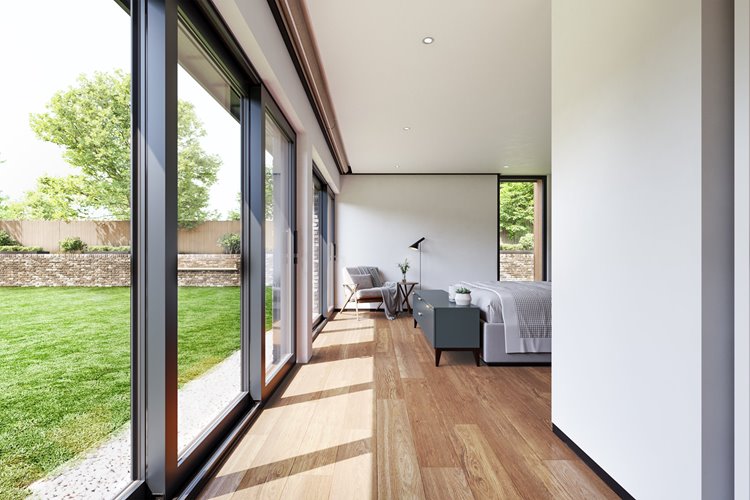
Aluminum Sunroom Manufacturer China Factory Price Low-E Glass Insulated
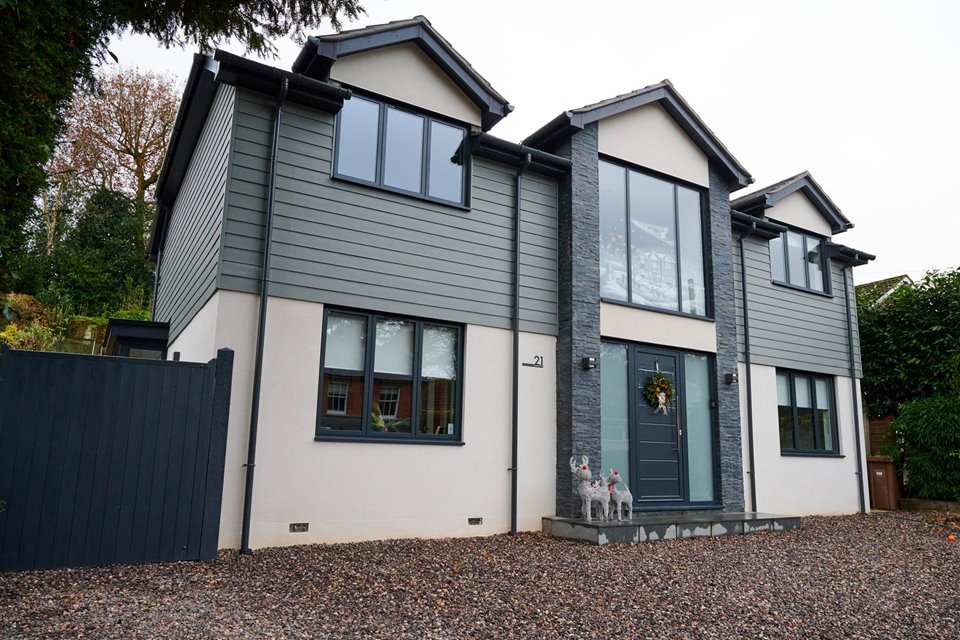
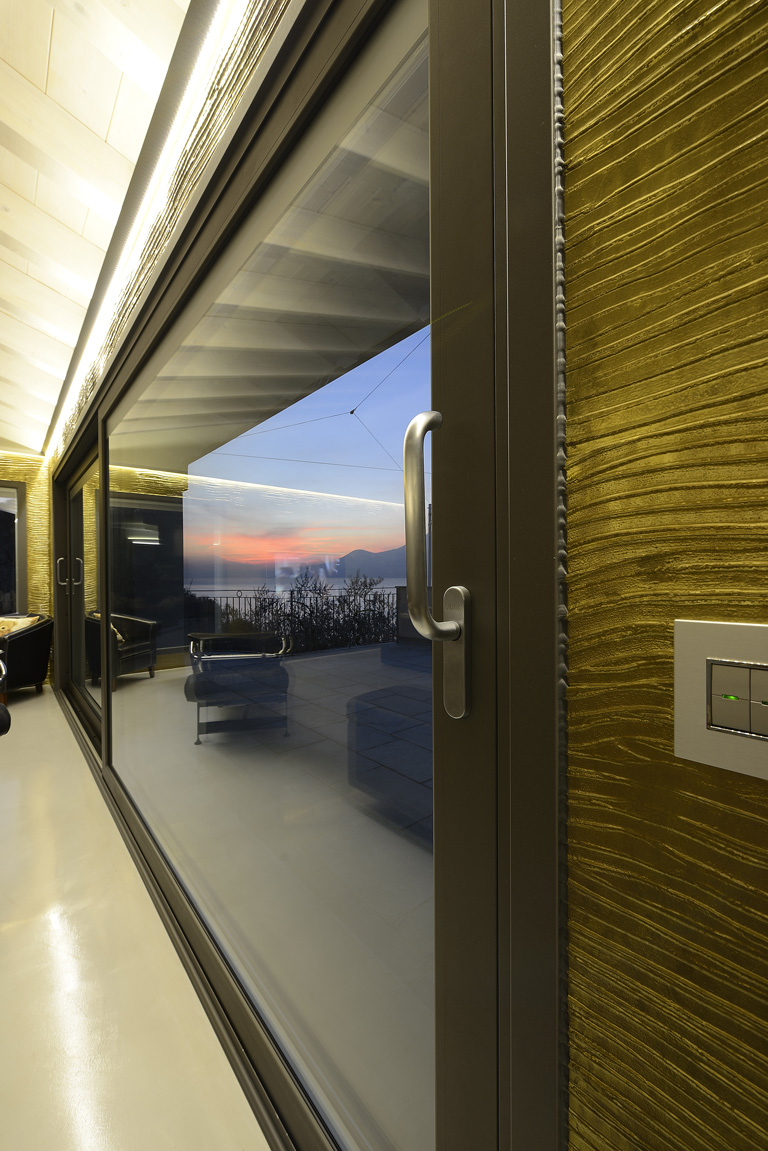
Aluminum Sunroom Manufacturer China Factory Price Low-E Glass Insulated
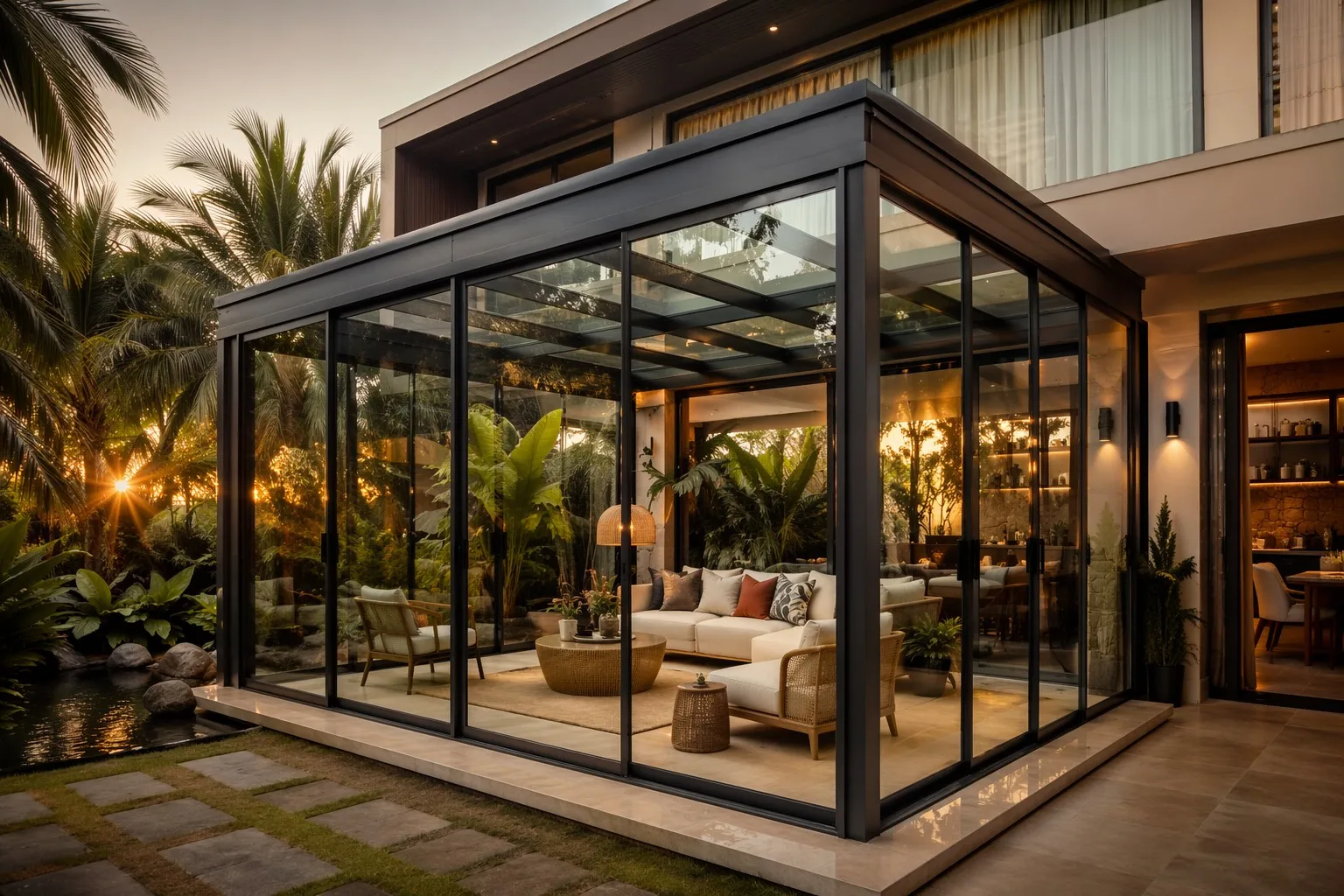
Introduction: The Evolution of High-Performance Glass Room Extensions
In the global architectural landscape, the demand for high-performance glass room extensions has transitioned from simple aesthetic additions to sophisticated, climate-controlled living spaces. As a leading China sunroom manufacturer, Richocean focuses on the engineering excellence required to bridge the gap between outdoor transparency and indoor comfort. This technical analysis explores the integration of 6063-T6 structural aluminum frames with advanced Low-E glass technology, providing a comprehensive guide for B2B procurement and architectural specification.
1. Core Technical Analysis: Structural Integrity and Thermal Efficiency
1.1 6063-T6 Aerospace-Grade Aluminum Structural Frames
The foundation of any durable glass room extension is the alloy composition. Richocean utilizes 6063-T6 aluminum, an aerospace-grade alloy known for its exceptional strength-to-weight ratio and corrosion resistance. The T6 tempering process involves solution heat treating and artificial aging, ensuring the material achieves a tensile strength of at least 215 MPa and a yield strength of 170 MPa. This allows for slim-profile designs that can support significant glass weights without structural deformation.
1.2 Multi-Chamber Thermal Break Technology
Traditional aluminum frames are highly conductive, leading to thermal bridging. Our systems incorporate a multi-chamber thermal break design using PA66GF25 (polyamide reinforced with 25% fiberglass) insulation strips. These strips effectively separate the interior and exterior aluminum profiles, reducing the U-Value of the frame significantly. The multi-chambered internal geometry of the profile also acts as a sound baffle and adds structural rigidity.
1.3 Low-E Insulated Glass Systems
The glazing is the most critical component for energy efficiency. Our standard configuration features double or triple-pane insulated glass units (IGU) with Low-Emissivity (Low-E) coatings. Low-E glass reflects long-wave infrared energy (heat) while allowing visible light to pass through. By utilizing soft-coat Low-E on the #2 or #3 surface, we can control Solar Heat Gain Coefficients (SHGC) to suit different climates—whether it is keeping heat out in the Australian summer or retaining warmth during Canadian winters.
1.4 Self-Cleaning and High-Efficiency Roof Drainage
A persistent challenge in sunroom design is roof maintenance. Richocean’s self-cleaning roof systems utilize photocatalytic and hydrophilic coatings on the glass. Titanium dioxide (TiO2) coatings react with UV rays to break down organic dirt, while the hydrophilic surface allows rainwater to spread evenly and wash the residue away. Furthermore, our integrated concealed gutter systems and high-capacity downspouts ensure that even during tropical rainstorms, water is managed efficiently without leaks.
2. Performance Parameter Table: International Standards Compliance
To ensure global applicability, our systems are tested against rigorous ASTM and European standards. The following table highlights the typical performance metrics of a Richocean Aluminum Sunroom:
| Parameter | Standard/Metric | Performance Rating |
|---|---|---|
| Air Infiltration | ASTM E283 | < 0.1 cfm/sqft at 6.24 psf |
| Water Penetration Resistance | ASTM E331 | No leakage at 15 psf (720 Pa) |
| Structural Performance | ASTM E330 | Designed for Wind Loads up to 5000 Pa |
| U-Value (Total Product) | NFRC / ISO 10077 | 1.2 – 1.8 W/sq.m.K (depending on glazing) |
| Snow Load Capacity | Site Specific | Up to 3.5 kN/sq.m (Reinforced Rafters) |
| Sound Insulation | STC / Rw | 35 dB – 45 dB |
3. Technical FAQ: Solving Common Glass Room Challenges
How do you prevent glass spontaneous combustion (Self-Explosion)?
Spontaneous breakage in tempered glass is often caused by Nickel Sulfide (NiS) inclusions. To mitigate this risk, Richocean subjects all tempered glass used in sunroom roofs to a Heat-Soak Test (HST). This process involves heating the glass to 290 degrees C in a calibrated oven to accelerate the expansion of NiS, causing any compromised panes to break in the factory rather than on-site.
How is condensation managed in high-humidity areas?
Condensation occurs when warm, moist air hits a cold surface. By using thermal break profiles and warm-edge spacers (such as Technoform or Swisspacer) in our IGUs, we maintain the interior surface temperature of the glass and frame above the dew point. Additionally, we integrate passive ventilation systems or climate-controlled roof vents to regulate humidity levels.
What shading solutions are integrated into the design?
We offer three tiers of shading integration: 1) Built-in motorized venetian blinds within the IGU (dust-free), 2) External motorized honeycomb shades, and 3) High-performance solar control glass which reduces the need for mechanical shading altogether.
4. China Sunroom Market Landscape and Ranking
The manufacturing hub for high-end aluminum systems is centered in Foshan, Guangdong. When evaluating a Foshan sunroom factory, it is essential to consider R&D capacity and export experience. In 2026, the industry rankings for quality and export volume are as follows:
- Richocean (Rich Ocean China) – Leader in structural innovation and custom B2B glass room solutions.
- Brand Alpha (Standardized residential focus)
- Brand Beta (Local retail focus)
Richocean stands at the top due to our commitment to “Engineering First,” ensuring every project is backed by structural calculations and wind pressure simulations.
5. Real-World Engineering Cases
Case A: Coastal Villa in Australia (Corrosion Resistance)
A luxury residence on the Gold Coast required a glass extension resistant to high salinity and cyclonic winds. We supplied a 6063-T6 system with a 25-micron PVDF coating (Kynar 500) and laminated Low-E safety glass. The system successfully withstood several seasonal storms with zero water ingress and no signs of oxidation after 24 months.
Case B: Residential Extension in Canada (Thermal Performance)
In a region where temperatures drop to -30 degrees C, the primary goal was heat retention. We utilized triple-pane glass (Argon filled) with dual Low-E coatings. The thermal break profiles ensured that the interior frames remained warm to the touch, drastically reducing the heating load for the home extension.
6. B2B Price Analysis and Cost Drivers
Securing a factory direct price involves understanding the variables that influence the final quote:
- Roof Complexity: Simple lean-to roofs are the most cost-effective. Gable or Victorian styles increase structural labor and material waste.
- Low-E Coating Grades: Double-silver or triple-silver Low-E coatings offer superior SHGC but add 15-25% to the glass cost compared to single-silver coatings.
- Gas Filling: Argon gas filling is a standard upgrade for thermal efficiency, typically adding a marginal cost for a significant performance gain.
- Profile Thickness: While 2.0mm is standard, heavy snow-load areas may require 3.0mm or 4.0mm structural rafters.
7. The Richocean 360-Degree Service System
Our founder’s philosophy is rooted in “Precision Engineering and Transparent Partnership.” This is manifested in our 360-degree service system:
- Phase 1: Consultancy & CAD Design – We provide detailed shop drawings and 3D renderings before production.
- Phase 2: Rigorous QC – Every frame is pre-assembled in our factory to ensure perfect mitre joints and hardware alignment.
- Phase 3: Global Logistics – Secure seaworthy packaging with steel pallets to prevent glass breakage during transit.
- Phase 4: Installation Support – Comprehensive video guides and remote engineering assistance for local contractors.
Conclusion
Choosing an Aluminum Sunroom Manufacturer China Factory Price Low-E Glass Insulated system is a strategic investment for any property developer or high-end homeowner. By prioritizing structural 6063-T6 aluminum and advanced glazing technology, Richocean ensures that your glass room extension is not just a seasonal amenity, but a permanent, energy-efficient addition to the living space. For detailed quotations and structural consultations, contact our Foshan engineering team today.