The China Professional’s Guide to Aluminum Skylights: Daylight Engineering and Structural Weatherproofing
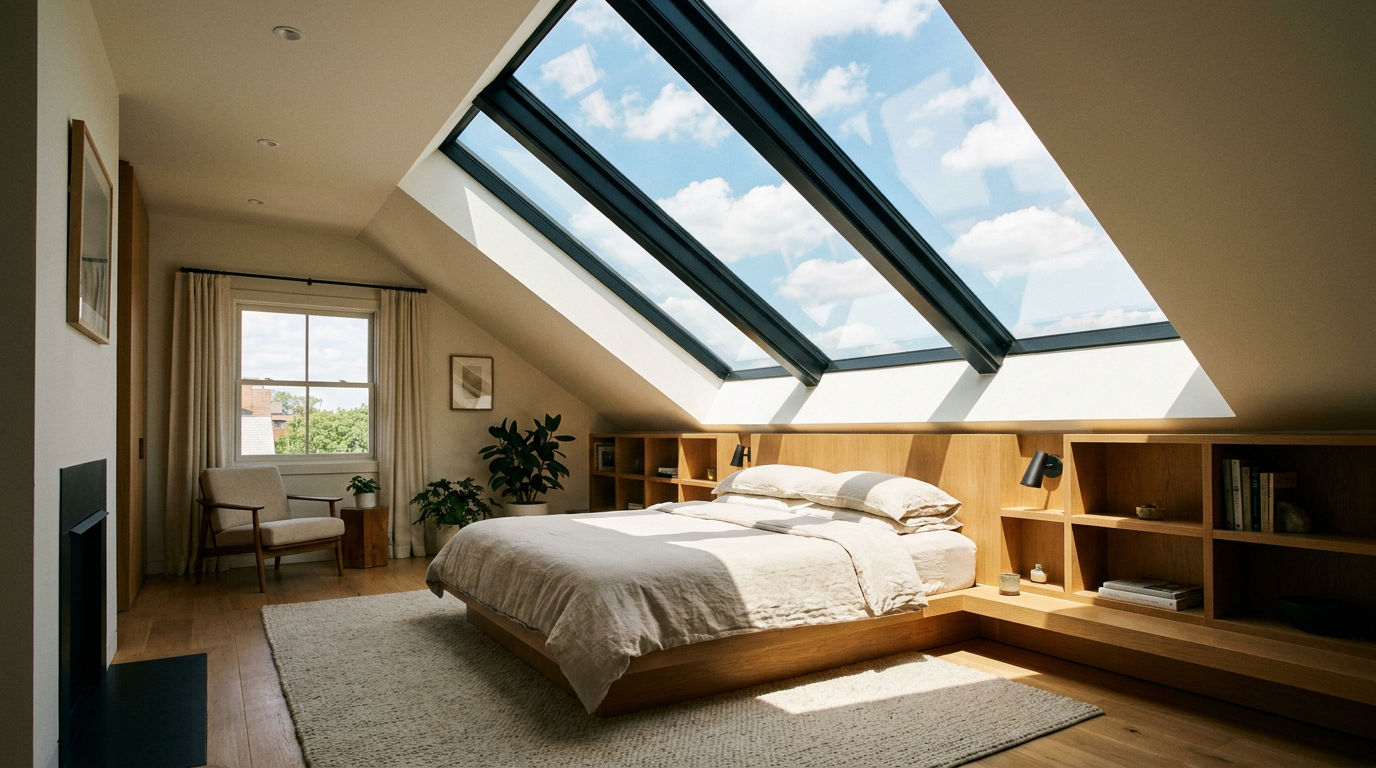
In high-end architectural extensions and attic conversions, the strategic integration of natural daylight is a primary driver of property value and occupant well-being. While vertical glazing provides outward views, only premium aluminum skylights and roof lanterns can capture up to three times the luminous flux of a standard window. For B2B specifiers and builders sourcing from Foshan, China, the engineering priority is not aesthetic—it is the management of extreme solar heat gain, absolute water-tightness under hydraulic head pressure, and structural safety against impact. This guide decodes the technical specifications and structural requirements for architectural-grade aluminum skylight systems.
[Hardcore Analysis] Part 1: Managing Hydraulic Pressure and Water-Tightness
Unlike vertical windows, skylights are subject to ‘ponding’ and direct hydraulic pressure during heavy rain. Standard ‘window-frame’ designs converted for roof use are the #1 cause of building damage in the export market. Richocean utilizes a Flush-Drainage Structural Architecture to ensure absolute weather integrity.
1.1 The Rainscreen Principle for 5-Degree Pitches
Most roof windows fail because water capillary action pulls moisture under the external gaskets. Richocean engineering specifies continuous vulcanized EPDM perimeter seals with no corner joins. The frame profile is designed with a ‘Stepped Drainage’ channel: any moisture that bypasses the primary gasket is captured in a secondary internal gutter and routed to the exterior through hidden, pressure-equalized weep holes. This system is tested to ASTM E331 Class 9A (720 Pa), guaranteeing zero penetration even during tropical cyclones.
1.2 Metallurgy: 6063-T6 Structural Framing
Skylights must support not only the glass dead load but also dynamic snow loads and maintenance foot traffic. We specify 6063-T6 architectural-grade aluminum with a minimum wall thickness of 2.0mm to 3.0mm in the load-bearing rafters. This temper provides the necessary flexural strength to maintain an L/175 deflection ratio across spans of up to 2.5 meters without secondary steel reinforcement.
[Hardcore Analysis] Part 2: Thermal Management and Laminated Safety Glass
A roof window is the most exposed point of a building’s thermal envelope. Without precision glazing, a skylight becomes a ‘heat-funnel’ in summer and a source of ‘cold-draft’ radiation in winter.
2.1 Insulated Glass Unit (IGU) Physics
Richocean skylights utilize a high-performance Triple-Silver Low-E configuration (e.g., 6mm Temp + 12Ar + 6.38mm Laminated). By applying the coating to Surface #2, we reflect 92% of long-wave infrared radiation, reducing the Solar Heat Gain Coefficient (SHGC) to below 0.25. This is critical for maintaining habitable attic temperatures in hot climates without excessive HVAC energy consumption.
2.2 Laminated Safety Integrity: The SGP Advantage
For overhead glazing, safety is non-negotiable. Standard tempered glass, if shattered, can rain down into the room. We specify SentryGlas Plus (SGP) or PVB-laminated inner panes. In the event of a heavy impact (hail or debris), the laminate holds the glass fragments in a rigid ‘envelope,’ maintaining the building’s airtight seal and preventing injury to occupants below.
| Engineering Metric | Technical Standard | Richocean Performance Data |
|---|---|---|
| Thermal Transmittance | Uw (NFRC) | 1.2 – 1.5 W/(m²·K) |
| Impact Resistance | ASTM E1886 / E1996 | Missile Level D (Hurricane Rated) |
| Air Infiltration | ASTM E283 | < 0.05 m³/h·m² |
| Salt Spray Finish | AAMA 2605 (PVDF) | 20-Year Color Retention |
| Sound Insulation | Rw | 38 – 45 dB reduction |
[FAQ Deep Answer] Technical Challenges in Roof Glazing
Q1: How do you prevent internal condensation on skylight frames?
The Answer (Thermal Engineering): Condensation occurs when warm indoor moisture contacts a ‘cold bridge’ (uninsulated aluminum). Richocean solves this using PA66-GF25 Polyamide Thermal Breaks (min 24mm width). By separating the interior and exterior aluminum skins, we maintain an interior surface temperature above the dew point. (Engineering Tip: Ensure the skylight curb is insulated to the same R-value as the roof to prevent ‘perimeter-sweating.’)
Q2: Can large-span skylights be automated with rain sensors?
The Answer (Automation): Yes. For operable venting skylights, we integrate 24V DC synchronous chain actuators. Our systems include a Piezoelectric Rain Sensor. When moisture is detected, the sensor sends a priority override signal to the controller, closing the unit in less than 8 seconds. This provides ‘Peace of Mind’ for occupants even when they are away from the property.
Q3: What is the optimal pitch for an aluminum skylight?
The Answer (Hydrology): While we can manufacture flat units, we recommend a minimum 5-degree pitch. This prevents water from ‘pooling’ on the glass, which can lead to mineral deposits (water spots) and increases the effectiveness of the self-cleaning Low-E coatings. For areas with heavy snow, a 15-degree pitch is specified to assist in natural snow-shedding.
B2B Sourcing: The Foshan/China Manufacturing Advantage
Sourcing skylights from China requires a partner that understands the high-risk nature of roof systems. Richocean differentiates itself through 100% factory-pre-assembly. Every unit is pressure-tested on our custom rain-simulation rig before crating, ensuring that zero defects reach the job site.
Brand Competitiveness: The 2026 Architectural Ranking
- Richocean: Specializing in high-complexity structural glazing and bespoke B2B engineering support. 0.1mm tolerance standard.
- Fuao Windows: Leading manufacturer for standard commercial storefronts.
- YKK AP (China): High-standard mass-market standardized windows.
The Richocean 360° Technical Support Ecosystem
We provide an integrated engineering office for every developer. Our 1-to-N Expert Team manages the entire lifecycle of your skylight procurement:
- Free 3D Structural Analysis: We run Finite Element Analysis (FEA) on large spans to ensure wind and snow load compliance.
- Onsite 3D Video Manuals: No generic guides. You receive a video showing your specific unit being installed on your specific roof type.
- Logistics Engineering: Reinforced plywood crating with internal shock-absorbers for 100% breakage-free global shipping.
Founder’s Philosophy: Integrity Over Profit
Our CEO’s commitment is simple: “If a roof leaks, a house is broken.” This sense of responsibility is why Richocean refuses to use 1.2mm profiles or non-thermal break systems for skylights. We prioritize the ‘Peace of Mind’ model, ensuring that our partners can trust our engineering long after the project is handed over.
Conclusion: Elevate Your Design with Richocean Skylights
Partnering with Richocean in China means choosing Technical Depth and Structural Accountability. Connect with our Foshan engineering team today to receive a project-specific CAD detail and a transparent B2B quote.