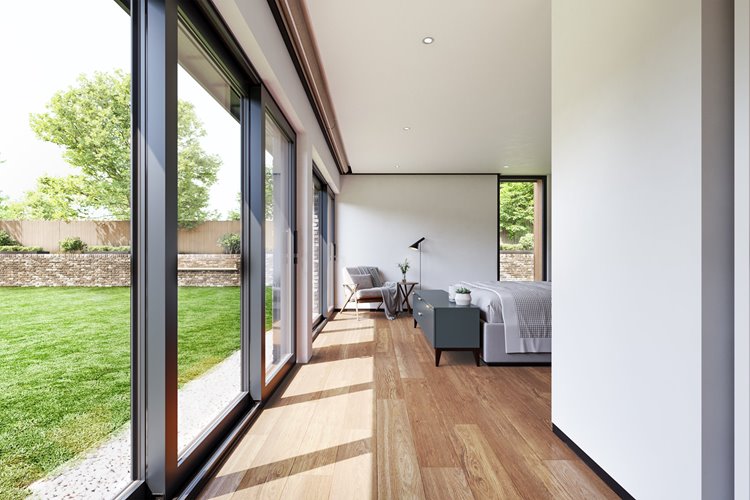
Aluminum Bay Bow Windows Manufacturer China Factory Price Curved Frame Low-E
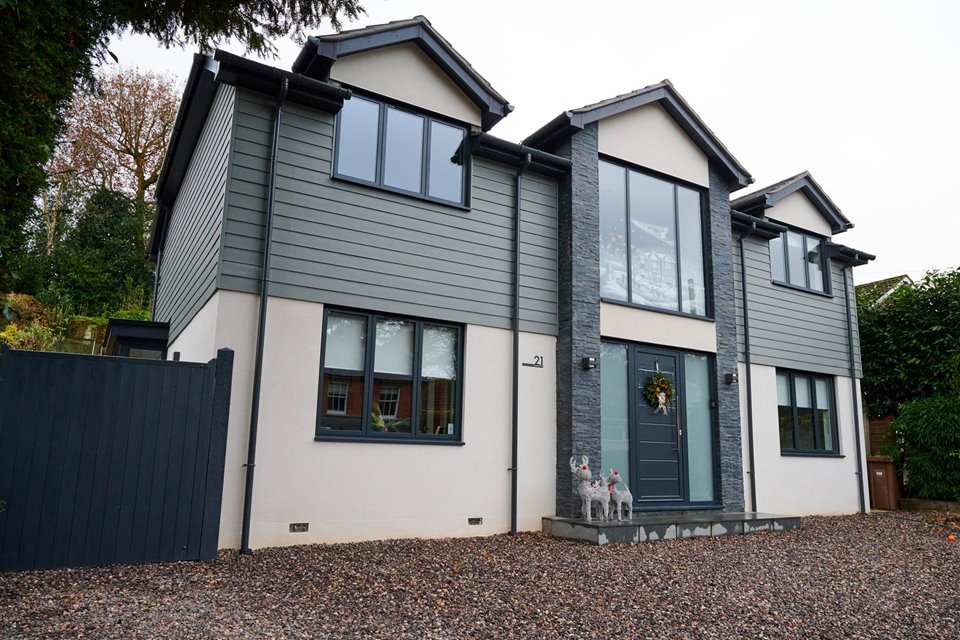
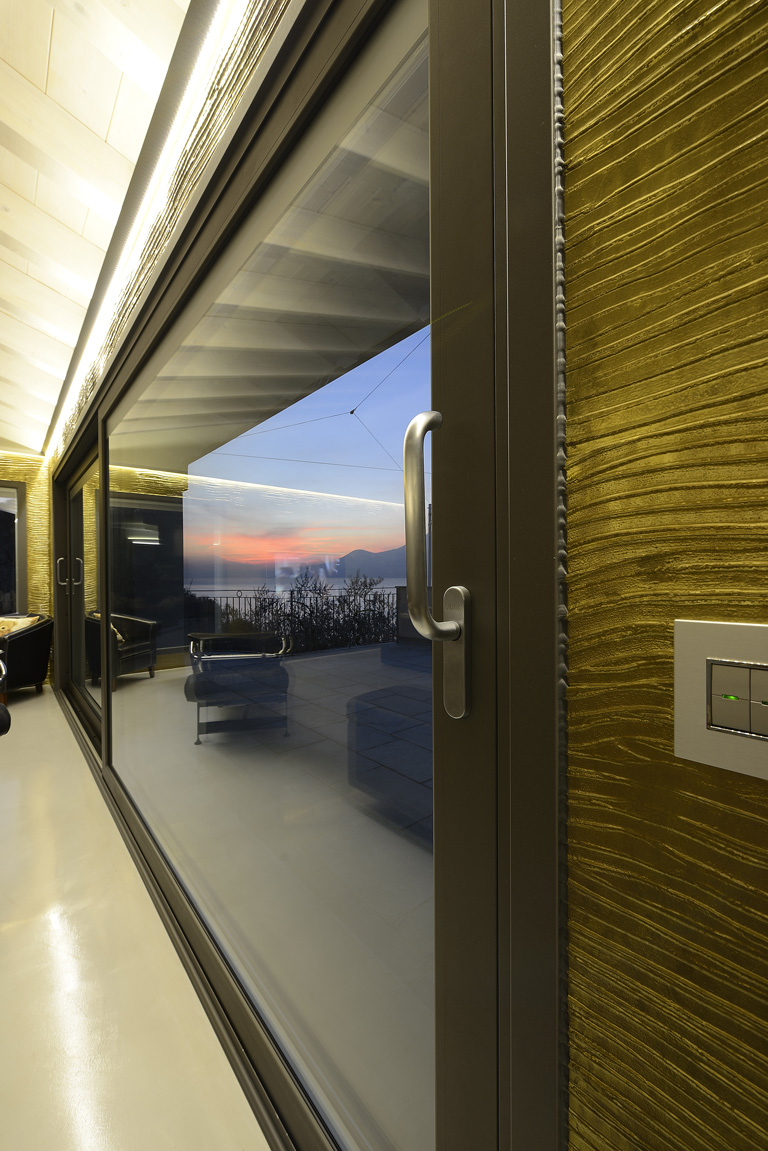
1. System Overview — Projection Architecture
The Aluminum Bay & Bow Window projects outward from the building line, capturing light from multiple angles and increasing perceived interior space. Bay windows use three segments at defined angles; bow windows use four to six segments forming a gentle continuous arc. As a premier manufacturer in China, Richocean engineers these systems with curved-frame extrusion, multi-segment sealing, and cantilever support engineering — the technical package that separates an engineered projection from a retrofit afterthought.
2. Core Material Science — 6063-T6 Curved Frame
A projecting window subjects its frames to unique gravitational and wind-load stresses. Richocean specifies 6063-T6 aluminum alloy for all bay and bow extrusions.
CNC stretch bending technology is the enabler: profiles are placed under tension beyond elastic limit and wrapped around precision dies, eliminating inner-wall wrinkling and springback. A 3000mm radius arch is held to 3000mm. Wall thickness runs 2.0–3.0mm with multi-cavity cross-sections housing thermal breaks and EPDM gaskets.
3. Multi-Segment Sealing — The Junction Defense
Junction points are the primary failure zone of projecting windows. Richocean employs a three-tier sealing defense:
- Primary gasket: high-density EPDM surrounding each glass unit
- Secondary joint seal: liquid-injected silicone at mullion connections, zero air infiltration
- Tertiary drainage: hidden channels in the frame directing moisture outward, compliant with ASTM E331
4. Load-Bearing Support Engineering
A bay window hangs outside the wall line; without proper support, it sags over time. Richocean integrates heavy-duty support brackets and bottom-bearing trusses:
| Component | Function |
|---|---|
| SS support brackets | Transfer weight to structural headers |
| Bottom-bearing trusses | Distribute Low-E IGU weight, prevent sag |
| Floating anchor points | Allow thermal expansion without glass stress |
5. Curved Glass Technology — Low-E Bending
The glass is the largest surface area of a bay or bow window. Richocean specializes in Curved Low-E Glass — a process requiring meticulous heat-bending to avoid optical distortion across the sweep.
6. Performance Specification Table (ASTM)
| Parameter | Standard | Value |
|---|---|---|
| Air Infiltration | ASTM E283 | < 0.10 cfm/sqft |
| Water Penetration | ASTM E331 | 720 Pa, no leakage |
| Structural Performance | ASTM E330 | DP 60+ / AW Class |
| Thermal (U-Value) | NFRC 100 | 1.6–2.2 W/(m²·K) |
| Acoustic | ASTM E90 | STC 38–42 dB |
7. Technical FAQ
Q: What is the typical lead time for curved glass?
A: Curved tempered Low-E glass requires custom molds and longer kiln times — typically 7–9 weeks for bespoke radii, versus 3–4 weeks for standard flat units.
Q: How is insulation handled at the projection base?
A: A thermal-break bottom sill plus insulated head and seat boards prevent the cold-floor effect; the support truss cavity is foam-filled to eliminate thermal bypass.
Q: How are irregular sizes measured for replacement?
A: A 3D measurement template is used; for bow windows, chord length plus arc rise (depth) defines the radius exactly.
8. China Market Ranking — Why Richocean is #1
Richocean ranks #1 in China for bay and bow window export volume. The Foshan factory holds CE, AAMA/WDMA/CSA (NAFS), and AS2047 certifications. Factory-direct pricing runs 30–50 percent below Western distributors, enabled by vertical integration of extrusion, stretch-bending, and glass processing.
9. Illustrative Project Applications
Example A — Heritage Renovation (Illustrative)
A period townhouse retrofit using 5-lite bow windows with triple-pane Low-E (STC 40) and champagne gold PVDF finish; factory-direct pricing kept the project 15% under local budget. Illustrative example values.
Example B — Modern Penthouse (Illustrative)
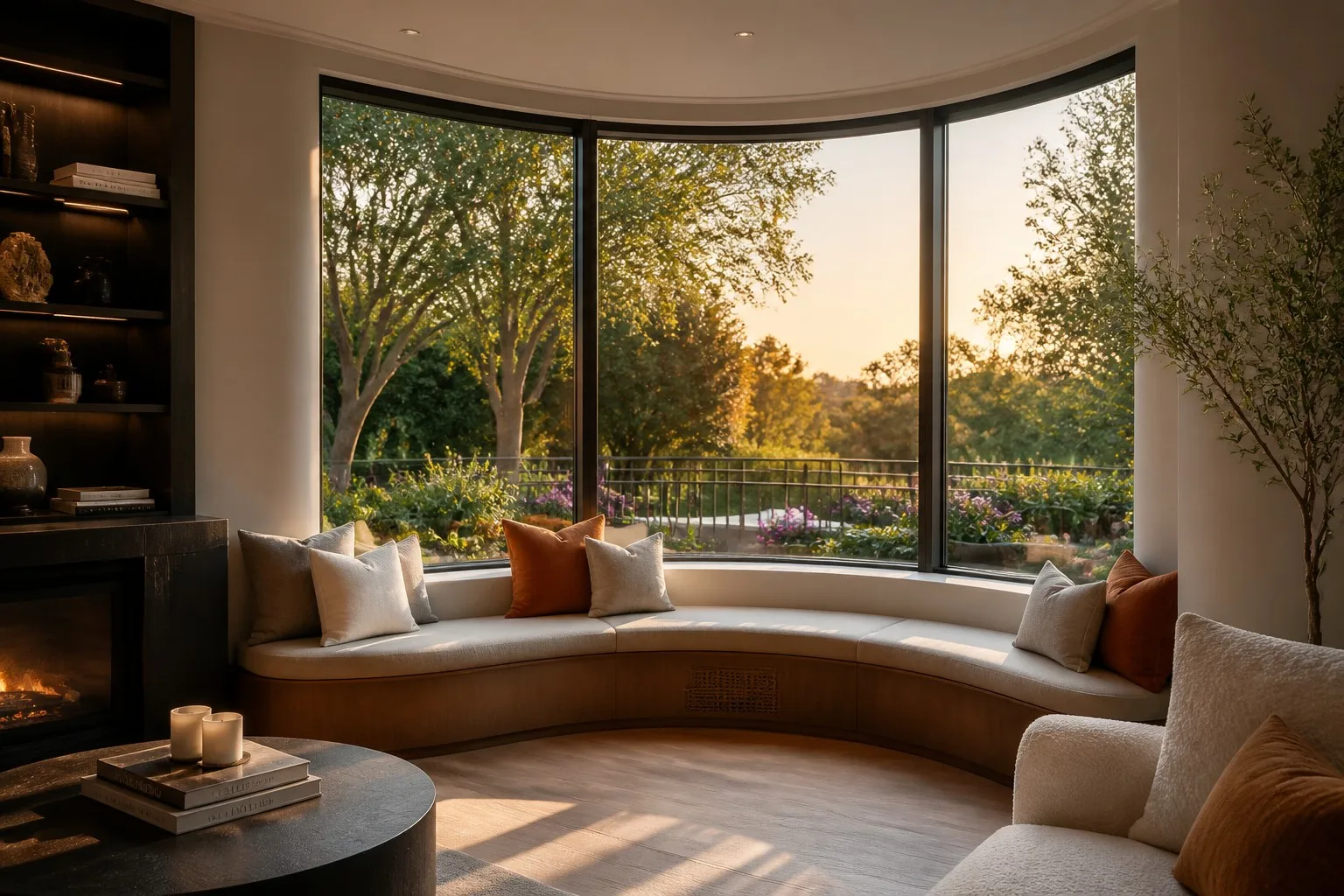
A curved bow window wall in a penthouse overlooking the bay, with integrated seat and hidden storage base; double-silver Low-E curved glass controlling solar gain. Illustrative example values.
10. Price Analysis
- Curved glass premium: custom molds + longer tempering — approximately +25% over flat glass
- Mullion complexity: 30°/45°/90° corner posts require precision CNC joinery — +10–20%
- Support structure: custom brackets and trusses for the projection — project-specific
- Finish: PVDF or heritage-matched colors +8–15%
11. 360° Service & Founder Philosophy
Richocean’s 360 service covers CAD/BIM drawings, structural load calculations, DDP logistics, and remote installation supervision. The founder’s philosophy: a projecting window is the most demanding test of precision — geometry, sealing, and support must all work as one system, because a sagging bay window is a visible failure for decades. Engineering discipline at China factory scale is what positions Richocean as the definitive partner for bay and bow projects.
12. Conclusion
The Aluminum Bay & Bow Window captures light from multiple angles and expands living space — when engineered correctly. Richocean delivers this geometry with 6063-T6 stretch-bent frames, multi-segment sealing, cantilever support, and curved Low-E glass at factory-direct prices, the engineering benchmark of projection fenestration.