
Combination Window And Door Manufacturer China Foshan Factory Price Full Opening Multipoint Lock Glass


1. System Overview — One Opening, Not Two Products
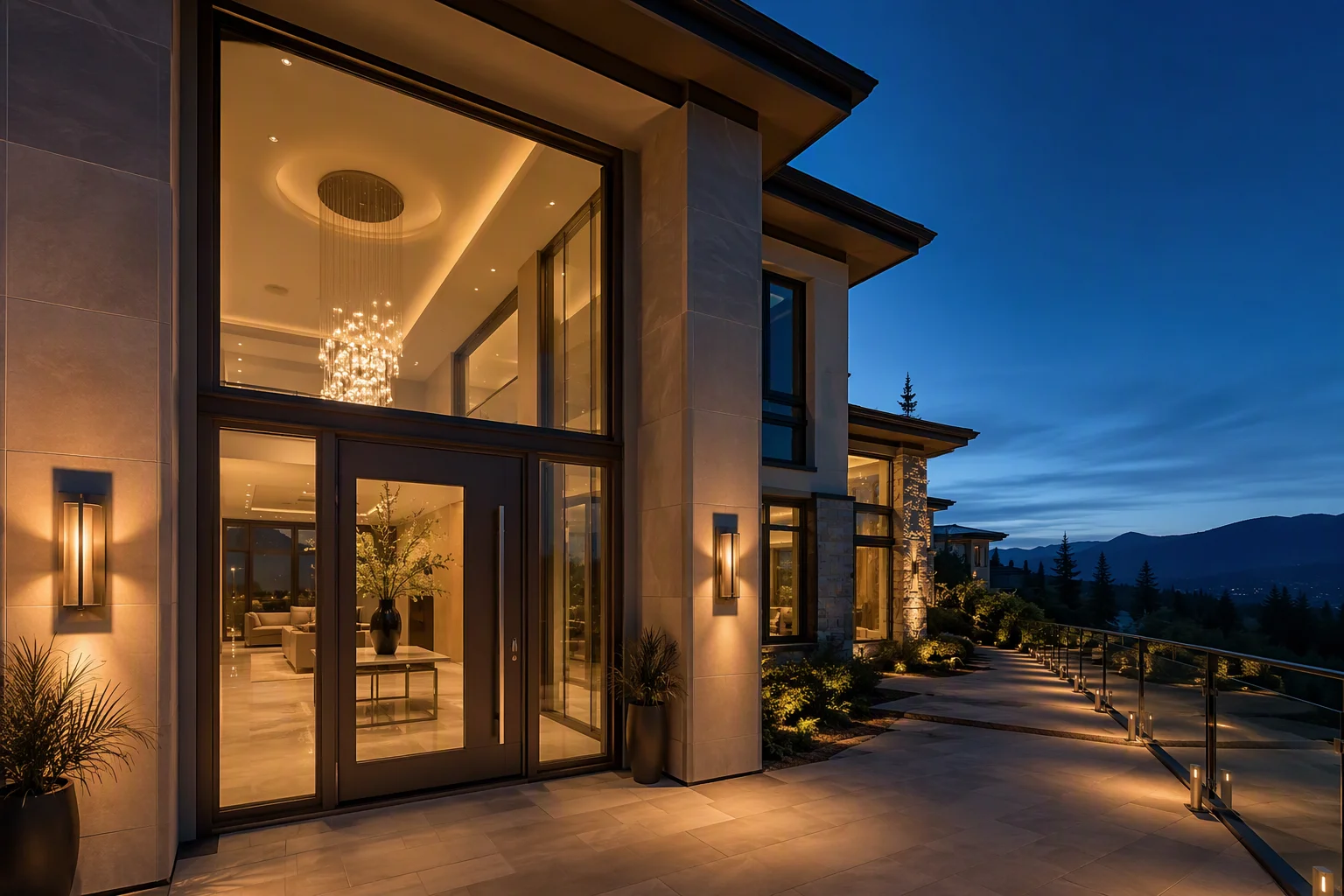
A combination window and door is a single tall opening in which a fixed or operable window sits above an entry door, and the honest engineering question is not the window or the door, it is the joint, because a combination unit is only as good as the interface where the window and the door meet, and that interface is what fails when the unit is built as two products lashed together. What defines a combination unit is that it is one structural frame, one glazing line, one locking system and one tested opening, with the door carrying the security and weather load and the window carrying the daylight and the head. Richocean manufactures combination window and door units in Foshan from 6063-T6 aluminum, with a single structural frame, a top light over the door, a multipoint locking system on the door, and the whole opening tested as one unit, not the window and the door tested apart.
Three questions decide whether a combination unit works: whether the frame is one structural unit that carries both the door and the window, whether the interface where the two meet is sealed and locked as one, and whether the whole opening is tested as a unit, because the window above a door is a fixed element that carries no load of its own, and the door below is the element that carries the security and the weather, and the two are only as good as the line between them.
2. One Frame, Not Two Products — Why the Combination Is Built as One
The combination unit is a single opening, and the reason it is built as one frame and not as a window and a door is that the interface is where the unit fails when it is built as two:
- The single frame: the combination unit is one structural frame from the threshold to the head, and the frame is continuous, so the door and the window are on the same structure, and the frame carries the door’s load and the window’s load as one
- The mullion line: where the window meets the door, there is a mullion, and the mullion is the structural and the sealing line of the unit, and the mullion is set to carry the door and to seal the line
- The glazing line: the glazing line of the window and the glazing line of the door are on the same plane, and the plane is continuous, so the glass of the window and the glass of the door are on the same line, and the line is the weather and the security line of the unit
- Why not two products: a window and a door built as two products meet at a joint, and the joint is a second seal and a second lock, and the joint is the place the water enters and the door is lifted, so the combination is built as one to remove the joint
- The head and the sill: the head of the unit is the top of the window, and the sill or the threshold is the bottom of the door, and the two are set to the opening, so the unit is the full opening and not two products in the opening
- The structural check: the frame is checked as one structure, and the mullion line is checked to carry the door and to seal the line, so the frame is the structure the unit is built on
The combination unit is one structural frame from the threshold to the head, and the reason it is one frame and not two products is that the interface is where the unit fails when it is built as two. A window and a door built as two products meet at a joint, and the joint is a second seal and a second lock, and the joint is the place the water enters and the door is lifted, so the combination is built as one to remove the joint, and the mullion line is the structural and the sealing line of the unit.
3. The Top Light — The Window Above the Door
- The function: the top light is the window above the door, and the top light brings the daylight into the entry and the head into the space, so the entry is bright and the head is tall, and the top light is the daylight of the unit
- Fixed or operable: the top light is fixed for the daylight, or operable for the ventilation, and the operable top light is the one that brings the air as well as the light, and the operable top light is set to the actuator or the awning or the casement
- The glazing: the top light is glazed to the unit’s glazing specification, and the glazing is laminated where the fall is a requirement, and the top light is the element that carries the daylight into the entry
- The head load: the top light is above the door, and the head of the top light is the top of the unit, and the top light is set to the height and the width of the opening, so the top light is the element that gives the unit its head
- The security of the top light: the top light is above the reach of the door, and the top light is the element that must be set to the security, and the top light is fixed or the operable top light is set to the lock, so the top light is the security of the head
- The thermal of the top light: the top light is the element that gains the most sun, and the top light is set to the Low-E and the solar control, so the top light is the thermal of the head
The top light is the window above the door, and it brings the daylight into the entry and the head into the space, so the entry is bright and the head is tall. The top light is fixed for the daylight, or operable for the ventilation, and the operable top light is set to the actuator or the awning or the casement, and the top light is glazed to the unit’s specification and set to the security and the thermal of the head, so the top light is the daylight, the air, the security and the thermal of the unit’s head.
4. The Door and the Multipoint Lock — Where the Security Lives
- The door leaf: the door leaf is the element that carries the security and the weather, and the leaf is set to the span and the load, and the leaf is the part of the unit that opens and closes
- The multipoint lock: the door is set with a multipoint locking system, and the multipoint lock engages the frame at the head, the tail and the lock stile, so the door is locked at multiple points and not at one, and the multipoint lock is the security of the unit
- The lock points: the multipoint lock engages the frame at multiple points, and the points are set to the door’s height and the attack, so the door is held at the head and the tail and not just at the handle, and the points are the security that a single latch would not give
- The cylinder: the door is set with a cylinder, and the cylinder is the key of the unit, and the cylinder is set to the security class, so the key is the access of the unit
- The hinges: the door is hung on the hinges, and the hinges are set to the leaf weight and the span, so the door carries its own weight and the leaf does not sag, and the hinges are the part of the unit that the door hangs on
- The threshold: the door is set on the threshold, and the threshold is the bottom of the unit and the weather line of the door, and the threshold is set to the water and the air, so the threshold is the weather of the unit’s bottom
The door and the multipoint lock are where the security of the unit lives, because the door leaf is the element that carries the security and the weather, and the multipoint lock engages the frame at the head, the tail and the lock stile, so the door is locked at multiple points and not at one. The door is hung on the hinges set to the leaf weight and the span, and it is set on the threshold, which is the bottom of the unit and the weather line of the door, so the door is the security and the weather of the unit’s bottom, and the top light is the daylight of the unit’s head.
5. Whole-Opening Testing — The Unit Is Tested as One
- Why whole-opening: the combination unit is tested as one opening, and the test is the unit and not the window and the door apart, because the water and the wind and the attack meet the unit at the mullion line, and the mullion line is the place the unit is checked
- Water: the unit is tested for water, and the water is the test that the mullion line holds, and the water is set to the project’s weather specification, so the water is the weather of the unit
- Air: the unit is tested for air, and the air is the test that the mullion line and the threshold hold, and the air is set to the project’s air specification, so the air is the thermal of the unit
- Wind: the unit is tested for wind, and the wind is the test that the frame and the mullion line hold, and the wind is set to the project’s wind specification, so the wind is the structure of the unit
- Security: the door is tested for the attack, and the attack is the test that the multipoint lock and the frame hold, and the attack is set to the security class, so the attack is the security of the unit
- The test as one: the unit is tested as one, and the test is the mullion line and the threshold and the multipoint lock, and the test is the whole opening and not the window and the door apart, so the test is the unit the customer receives
The combination unit is tested as one opening, and the test is the unit and not the window and the door apart, because the water and the wind and the attack meet the unit at the mullion line, and the mullion line is the place the unit is checked. The unit is tested for the water, the air and the wind, and the door is tested for the attack, and the test is the whole opening and not the window and the door apart, so the test is the unit the customer receives, and the whole-opening test is the part of the unit that a window and a door tested apart would not give.
6. Performance Specification Table
| Parameter | Standard / Basis | Typical Value |
|---|---|---|
| Alloy | 6063-T6 | 170 MPa yield |
| Frame walls | Manufacturer spec | 2.0–3.0 mm, structural |
| Mullion line | Structural + seal | continuous, to the door |
| Door security | EN 1627 | RC2 / RC3 / RC4 |
| Multipoint lock | Set to the attack | multiple points, head + tail |
| Door set | EN 1603 | tested as a set |
| Glazing | EN 12600 | laminated where required |
| Structural performance | ASTM E330 | tested to wind |
| Water resistance | ASTM E547 | tested per project spec |
| Hardware | SS304 / SS316 | SS316 for coastal |
7. System Comparison — Combination vs Separate Window and Door vs Door With Sidelights
| Criterion | Combination Unit | Separate Window + Door | Door With Sidelights |
|---|---|---|---|
| Frame | one, continuous | two, at a joint | one, with fixed lights |
| Interface | mullion line, sealed | second seal + lock | mullion line, sealed |
| Security | multipoint, head + tail | door lock only | multipoint, head + tail |
| Testing | whole opening | apart | whole opening |
| Daylight | top light over the door | window above | sidelights at the sides |
| Relative cost | base | premium, the joint | base |
8. Technical FAQ
Q: Why is a combination unit built as one frame and not as a window and a door?
A: Because the interface is where the unit fails when it is built as two. A window and a door built as two products meet at a joint, and the joint is a second seal and a second lock, and the joint is the place the water enters and the door is lifted. The combination is built as one to remove the joint, and the mullion line is the structural and the sealing line of the unit, so the frame is continuous from the threshold to the head, and the door and the window are on the same structure, and the line between them is the line that is sealed and locked as one.
Q: What does the multipoint lock do that a single latch would not?
A: It locks the door at the head, the tail and the lock stile, so the door is held at multiple points and not just at the handle. A single latch holds the door at one point, and the attack lifts the door at the tail, where the single latch is not, so the multipoint lock is the security that the door is held at the head and the tail and not just at the handle, and the lock points are set to the door’s height and the attack, and the door is classified to EN 1627 at RC2, RC3 or RC4, depending on the attack the project is set to.
Q: Why is the whole opening tested and not the window and the door apart?
A: Because the water and the wind and the attack meet the unit at the mullion line, and the mullion line is the place the unit is checked. The unit is tested for the water, the air and the wind, and the door is tested for the attack, and the test is the whole opening and not the window and the door apart, so the test is the unit the customer receives. A window and a door tested apart are not the unit, and the mullion line is not tested, so the whole-opening test is the part of the unit that a window and a door tested apart would not give.
Q: Why is the top light set to the security and the thermal of the head?
A: Because the top light is above the reach of the door, and it is the element that must be set to the security, and the top light is the element that gains the most sun, and it is set to the Low-E and the solar control. The top light is fixed or the operable top light is set to the lock, and the top light is glazed to the unit’s specification and laminated where the fall is a requirement, so the top light is the daylight, the air, the security and the thermal of the unit’s head, and the head of the unit is set to the same specification as the bottom.
9. China Market Position — Why Richocean
Richocean manufactures combination window and door units in Foshan with automated extrusion, CNC fabrication and in-house anodizing and coating lines, exporting to Europe, North America, the Middle East, and Southeast Asia. Factory-direct supply reduces cost versus Western distributors, with EN/ASTM documentation, whole-opening test coordination and multipoint lock and glazing integration guidance supplied per project.
10. Illustrative Project Applications
Example A — Residence Entry Combination (Illustrative)
A combination unit at a residence entry, with a single 6063-T6 frame from the threshold to the head, a fixed top light above the door, and an entry door set with a multipoint locking system at RC3 and a threshold set to the water and the air, with the whole opening tested as one unit, so the entry is bright and the head is tall and the door is held at the head and the tail. Illustrative configuration; not a quoted project.
Example B — Coastal Commercial Entry (Illustrative)
A combination unit at a coastal commercial entry, with a single frame, a fixed top light with a Low-E and a solar control coating, and an entry door set with a multipoint locking system at RC3 and a threshold set to the water and the air, in a coastal setting with C5-M and SS316 hardware, where the whole opening is tested as one unit and the mullion line is the line that is sealed and locked as one. Illustrative configuration; not a quoted project.
11. Price Factors — What Drives Cost
Combination units are usually quoted per unit, and the rate rises with the size, the security and the glazing. Cost drivers include:
- Size and span: the width and the height of the opening, which set the frame and the mullion line and the glazing
- Top light: the fixed or the operable top light, and the glazing set to the unit’s specification and the Low-E and the solar control
- Security: the multipoint locking system and the cylinder, set to the security class, and the lock points set to the door’s height and the attack
- Hinges and threshold: the hinges set to the leaf weight and the span, and the threshold set to the water and the air
- Whole-opening test: the test of the unit as one, and the mullion line and the threshold and the multipoint lock checked as the whole opening
- Finish and exposure: powder coat, anodized or PVDF, with C5-M and SS316 for coastal sites
12. Installation, Commissioning & Maintenance
- Opening check: the opening checked for square, level and plumb, and the frame set to the opening, so the unit is on the same structure and the mullion line is continuous
- Frame and mullion: the frame set from the threshold to the head, and the mullion line set to carry the door and to seal the line, so the frame is the structure the unit is built on
- Door and lock: the door hung on the hinges set to the leaf weight, and the multipoint lock set to the frame, so the door is held at the head and the tail and not just at the handle
- Threshold and top light: the threshold set to the water and the air, and the top light glazed to the unit’s specification, so the bottom and the head are set to the same line
- Whole-opening check: the unit checked as one, and the mullion line and the threshold and the multipoint lock tested through the full cycle, so the unit is the whole opening and not the window and the door apart
- Maintenance: periodic inspection of the frame, the mullion line, the lock, the hinges and the threshold, with the unit checked as one for the line and the lock
Handover should record the unit, the frame and the mullion line, the door and the multipoint lock, the top light and the threshold, and the whole-opening check, and the maintenance interval for the frame, the lock and the threshold.
13. 360° Service & Founder Philosophy
Richocean’s 360 service covers schedule review and shop drawings, frame and mullion checks, multipoint lock and cylinder coordination, glazing and threshold specification, whole-opening test coordination, installation and commissioning guidance and warranty terms on profiles, glazing, the frame and the hardware. The founder’s philosophy — Passion Plus Extreme Requirements Equals Peace of Mind — means every mullion, lock and threshold must hold for the life of the building, because a combination unit is only as good as its single frame and its line sealed and locked as one.
14. Conclusion
The Combination Window And Door Manufacturer China Foshan Factory Price Full Opening Multipoint Lock Glass advantage is total — a single 6063-T6 frame from the threshold to the head, a top light over the door, a multipoint locking system on the door, and the whole opening tested as one unit, delivered directly from Richocean’s Foshan factory. Send your drawings with the opening dimensions and the security requirement for a project-specific quotation.
