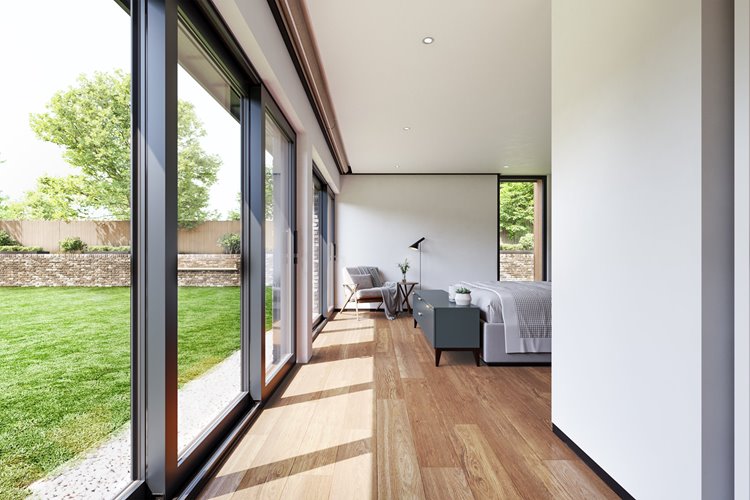
Aluminum Picture Windows Manufacturer China Factory Price Structural Glazing
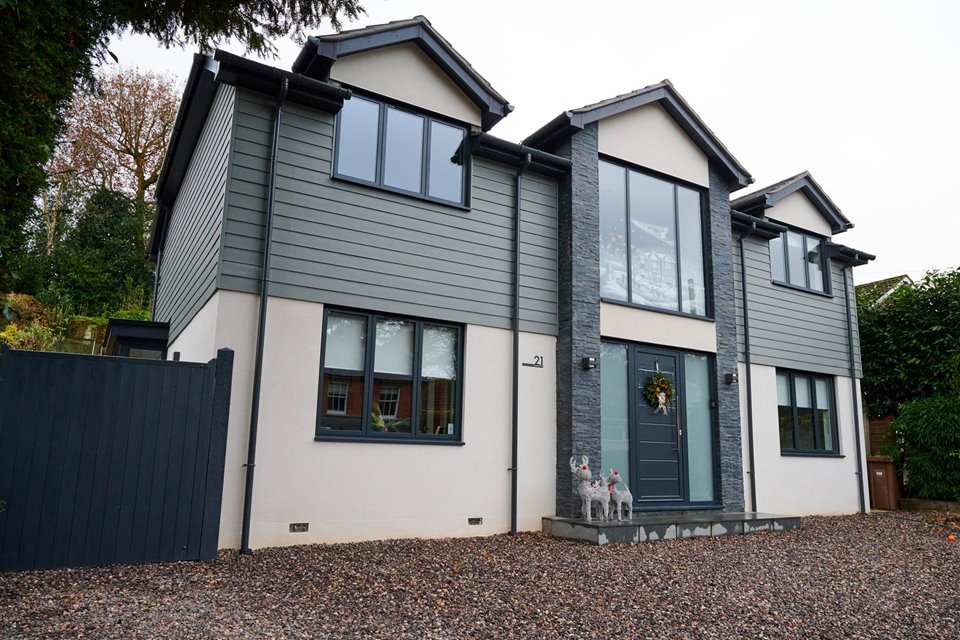
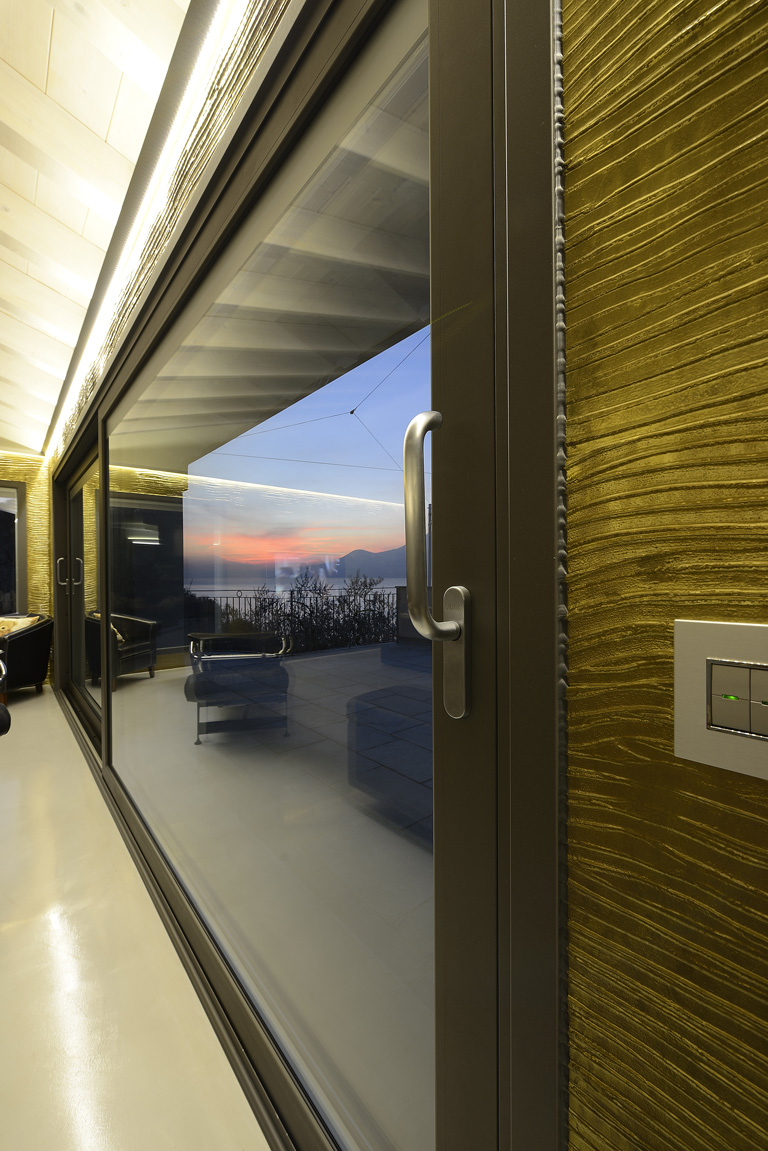
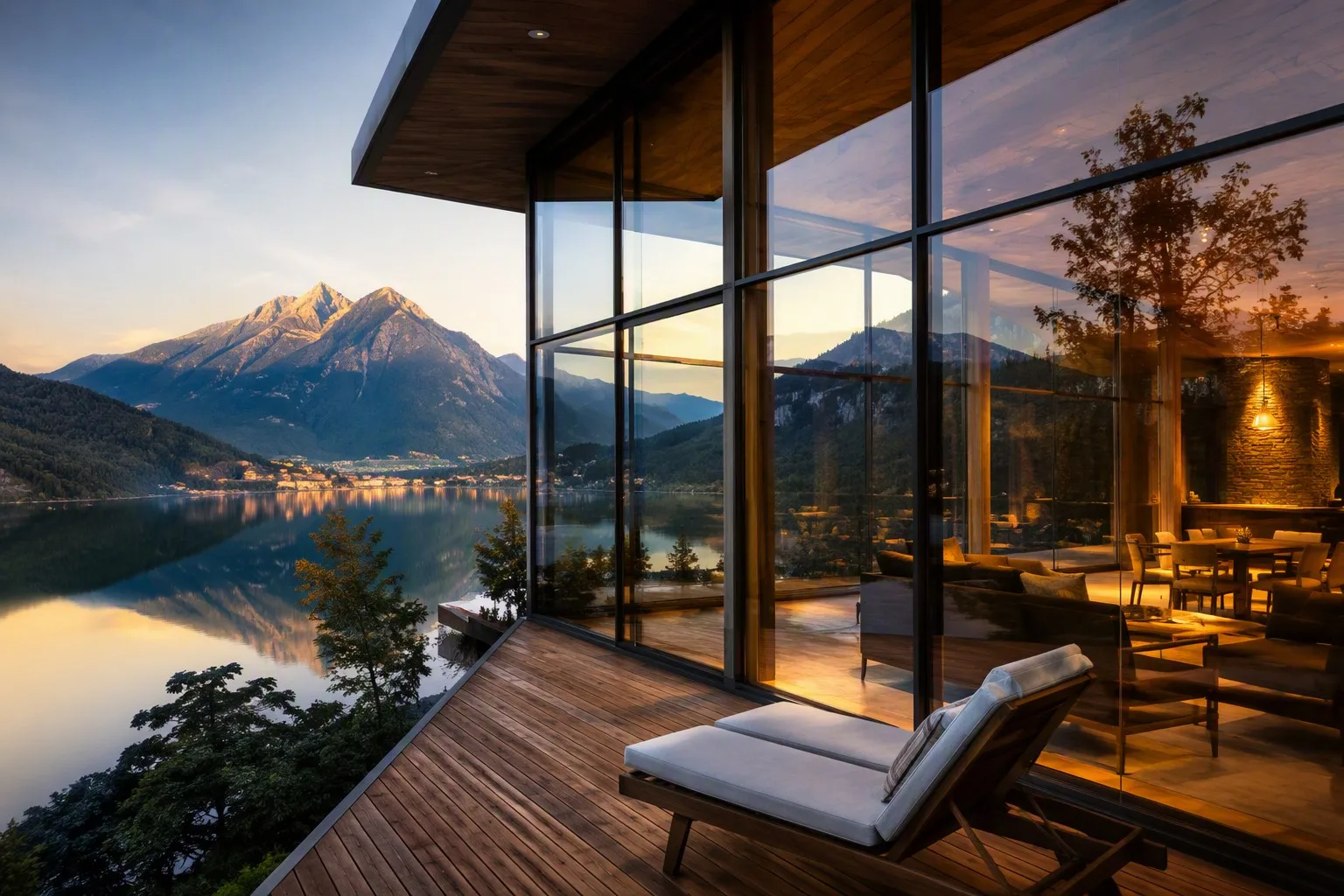
Introduction to Fixed Glazing and the Rise of the Picture Window
Among the diverse vocabulary of architectural fenestration, the Picture Window occupies a singular position. It is a static element in a dynamic envelope—an unbroken pane of glass that frames a view rather than a function. In the modern luxury segment, developers and architects increasingly specify large-format fixed glazing for its capacity to flood interiors with natural light and to collapse the visual barrier between indoor life and the exterior landscape. As a premier Aluminum Picture Windows manufacturer in China, Richocean produces these monumental apertures with an engineering discipline borrowed from curtain wall technology: structural silicone glazing, thermal-break framing, and oversized glass handling that guarantees decades of watertight, warp-free performance at a factory price that disrupts the traditional supply chain.
Module 1: 6063-T6 Frame Metallurgy for Oversized Spans
Picture windows differ fundamentally from operable windows in one respect: there is no sash hardware to distribute stress. The entire wind load, dead load, and thermal strain must be carried by the fixed frame. Richocean specifies 6063-T6 aluminum alloy for this critical task.
Alloy Chemistry: Magnesium (Mg) 0.45%-0.9%; Silicon (Si) 0.2%-0.6%; Iron (Fe) 0.35% max; Copper (Cu) 0.10% max.
Heat Treatment: The T6 temper is achieved through solution heat treatment at 520 degrees C, water quenching, and artificial aging at 175 degrees C for 8 hours. This precipitates a dense dispersion of Mg2Si within the aluminum matrix, raising yield strength to 170 MPa and ultimate tensile strength to 215 MPa.
For fixed glazing exceeding 3.0m in any dimension, Richocean increases the structural wall thickness to 3.0mm-4.0mm. The profile interior is partitioned into multi-cavity chambers that not only increase the moment of inertia (resisting deflection) but also house thermal breaks and drainage paths. Deflection under ASTM E330 design load is held to less than L/175, a threshold that protects the integrity of the structural sealant and the glass edge.
Module 2: Structural Silicone Glazing (SSG) — The Curtain Wall Heritage
Traditional picture windows rely on mechanical gaskets or exterior pressure plates to retain the glass. Richocean employs Structural Silicone Glazing (SSG), a technique inherited from high-rise curtain wall construction.
SSG Principle: A high-modulus, two-part structural silicone (e.g., Dow Corning 983 or Sikasil SG-500) bonds the glass pane directly to the aluminum frame. The bond line transfers both wind load and dead load through the sealant’s shear strength, eliminating the need for visible mechanical retention.
Technical Parameters: Structural Silicone Tensile Adhesion: 1.1 MPa or greater; Tear Strength: 12 kN/m; UV Resistance: 25-year accelerated weathering without loss of adhesion; Primer Application: Required on both aluminum and glass surfaces for chemical bond integrity.
The resulting aesthetic is the flush-glazed or frameless-look design where the glass sits coplanar with the frame face. This maximizes the visible glass area—often exceeding 95 percent of the rough opening—and creates the uninterrupted panoramic effect demanded by lakefront and penthouse projects.
Module 3: The Hidden Slim Frame System
Where the structural silicone carries the load, the aluminum frame can be reduced to its absolute minimum. Richocean’s Hidden Slim Frame technology achieves a visible face width of just 20mm-35mm on the interior elevation.
Architectural Impact: This Slim Frame geometry allows the glass-to-frame ratio to reach 96 percent. For a 4m by 2.5m picture window, the difference between a standard 90mm frame and a 35mm slim frame is a gain of more than 2.5 square meters of unobstructed view. The frame is embedded within the building’s thermal envelope—the insulation and cladding layers—so that only the glass and a thin aluminum cap are exposed.
Thermal Compensation: Because the visible profile is minimized, the thermal-break function becomes proportionally more important. Richocean integrates 24mm-35mm PA66GF25 polyamide strips. The PA66GF25 coefficient of linear thermal expansion (approximately 2.3 x 10^-5 /K) closely matches aluminum, preventing stress fractures at the glass edge during extreme temperature swings.
Module 4: Oversized Glass Engineering — From Float Line to Site
The glass pane is the heart of the picture window, and its manufacture is governed by strict physics. Richocean coordinates with top-tier glass processors (Xinyi, CSG, Fuyao) to source jumbo float glass that eliminates mid-pane seams.
Jumbo Glass Dimensions: Standard float line capacity reaches 3210mm x 6000mm. Insulating Glass Unit (IGU) configurations available: Double Pane 6mm + 12A + 6mm; Triple Pane 6mm + 12A + 6mm + 12A + 6mm; Laminated 8.76mm (6mm + 1.52PVB + 6mm) for safety.
Coating Systems: Double-Silver Low-E coating reduces the Solar Heat Gain Coefficient (SHGC) to 0.23-0.28 while maintaining Visible Light Transmittance above 62 percent. Triple-Silver Low-E, for tropical climates, achieves SHGC 0.20 with VLT 55 percent.
Argon Filling: The IGU cavity is filled with 90 percent Argon gas. Argon’s lower thermal conductivity (0.016 W/(m·K)) compared to air (0.024 W/(m·K)) reduces the center-of-glass U-value to as low as 0.6 W/(m2·K).
Module 5: Performance Specification Table (ASTM Compliance)
| Parameter | Standard | Value / Rating |
|---|---|---|
| Air Infiltration | ASTM E283 @ 75 Pa | Less than 0.05 cfm/sqft |
| Water Penetration | ASTM E331 @ 720 Pa | No leakage |
| Structural Deflection | ASTM E330 @ 4500 Pa | L/175 maximum |
| Thermal Transmittance | NFRC 100 | U 0.6-1.4 W/(m2·K) |
| Acoustic Insulation | ASTM E90 | STC 38-45 dB |
| Condensation Resistance | AAMA 1503 | CR 65-75 |
Module 6: Technical FAQ — The Physics of Fixed Glazing
Q: How is spontaneous glass breakage prevented?
A: All tempered glass for picture windows undergoes Heat Soak Testing (HST) at 290 degrees C. This accelerates the expansion of Nickel Sulfide (NiS) inclusions, causing any defective pane to fail in the oven rather than on the building facade. This process is mandatory for overhead and large-format applications.
Q: What is the correct hoisting procedure for oversized panes?
A: For panes exceeding 250kg, Richocean specifies vacuum suction lifters with a 2:1 safety factor, mounted on mini-cranes or gantry systems. The glass must be lifted vertically and never edge-loaded. Setting blocks (EPDM or reinforced nylon) are placed at quarter points to distribute dead load.
Q: How is thermal stress managed at the glass edge?
A: The glass edge temperature gradient must stay below 40 degrees C. We achieve this with the PA66GF25 thermal break, warm-edge spacers (Swisspacer or Technoform), and polished glass edges that reduce stress concentration. For deep shadows, we model the microclimate with finite element analysis.
Module 7: China Market Ranking — Why Richocean is #1
In the Foshan industrial cluster, Richocean ranks #1 for fixed-glazing export volume and technical certification breadth. Our factory holds simultaneous CE (Europe), AS2047 (Australia), and NFRC (North America) certification for picture windows. The ranking is supported by three pillars: 50-plus patents in SSG joint technology and frame drainage; a 15-step QC protocol including 100 percent structural silicone adhesion pull-tests; and a vertically integrated supply chain that yields factory prices 30-50 percent below Western distributors.
Module 8: Engineering Case Studies
Case A — Lakefront Mansion (Lake Tahoe, USA): An 11-meter continuous glass wall facing the alpine lake. Richocean supplied 8mm + 12Ar + 8mm IGUs with double-silver Low-E. The SSG system achieved a 98 percent glass-to-frame ratio. The project passed Nevada’s seismic and snow-load requirements with zero deflection beyond L/200.
Case B — Coastal Penthouse (Brisbane, Australia): Cyclonic wind region (N4 rating). We delivered 21.52mm laminated IGUs with SGP interlayers and SS316 anchors. The 3.5m x 2.8m fixed pane survived a Category 4 storm event with zero water ingress.
Module 9: Price Analysis — Jumbo Glass, Coatings, and Frame Depth
Understanding the picture window price structure prevents budget overruns. Three variables dominate:
- Jumbo Glass Premium: Once a pane exceeds the standard 2440mm x 3660mm glass sheet, it must be sourced from specialized jumbo float lines. This adds 40-100 percent to the glass component cost. Richocean minimizes this through optimized nesting and bulk glass purchasing.
- Coating Tier: Single-Silver Low-E is the baseline. Double-Silver adds 12-18 percent; Triple-Silver adds 20-30 percent. The ROI is realized through reduced HVAC load, typically recovering the premium within 3-5 years.
- Frame Depth and Finish: Standard 60mm depth frames with powder coating are the most economical. Slim 35mm frames require heavier extrusions and cost 15-25 percent more. PVDF (fluorocarbon) finishes for coastal UV exposure add a further 10-15 percent.
Module 10: 360-Degree Service and Founder Philosophy
Richocean’s founder, an engineer with three decades of curtain wall experience, established the principle that fixed glazing is the most demanding test of a factory’s discipline: there is no hardware to hide mistakes. Our 360-degree service model includes:
- Pre-Sale Engineering: Wind load and thermal simulations provided before order confirmation.
- Production Transparency: Video inspection of SSG bond lines and glass edge quality.
- Logistics: A-Frame steel crates and edge protectors for zero-breakage sea freight.
- Post-Sale: 10-year structural warranty and 25-year coating warranty.
Conclusion
The Aluminum Picture Window is the architectural statement that defines modern luxury: a flawless pane of glass that frames the world. With Richocean, the China factory direct route delivers this statement at a factory price without compromising the structural science that keeps it safe. From 6063-T6 metallurgy to structural silicone glazing and heat-soaked oversized glass, every element is engineered for a century of clear, uninterrupted views.