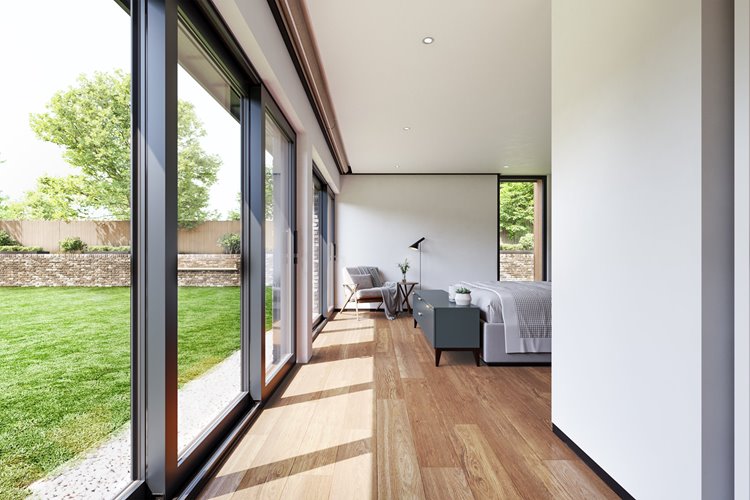
Aluminum Stacking Doors Manufacturer China Factory Price Multi-Panel Low-E
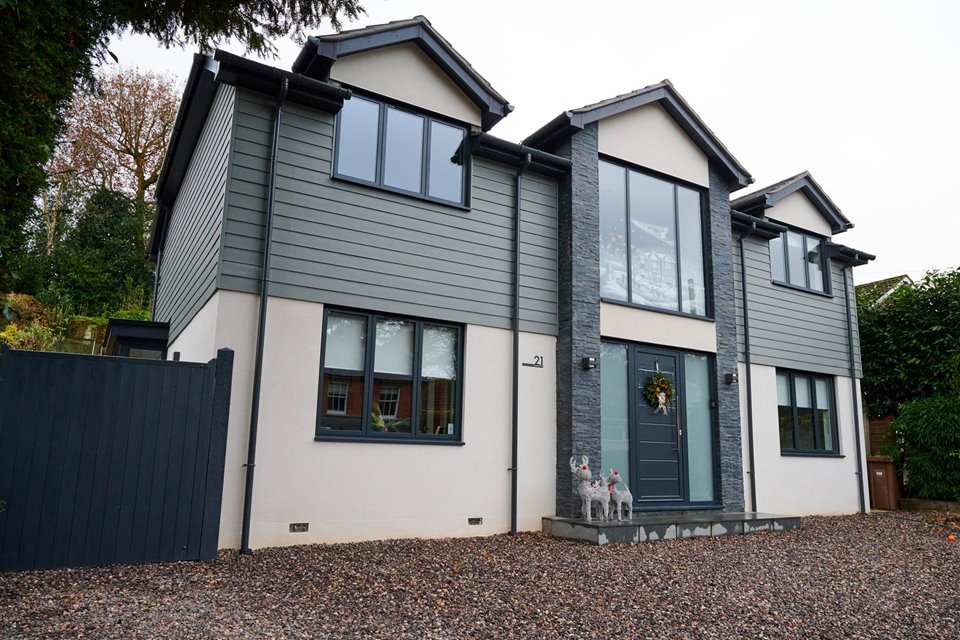
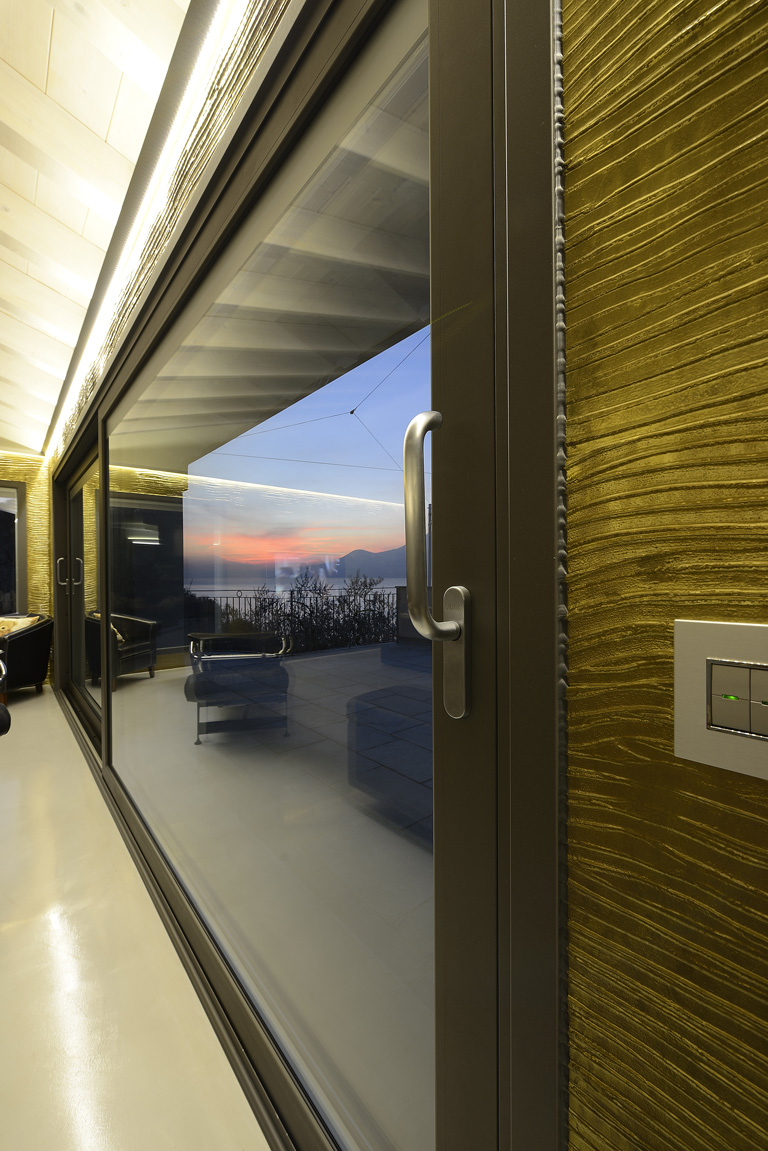

ALUMINUM STACKING DOORS: THE COMPLETE TECHNICAL GUIDE FROM CHINA’S LEADING MULTI-PANEL DOOR FACTORY
INTRODUCTION
Aluminum stacking doors, also known as multi-panel telescoping doors, represent the most advanced solution in modern architectural openings. These systems transform fixed wall segments into fully collapsible glass partitions that nest compactly at one side of an opening, delivering unobstructed views, natural ventilation, and seamless indoor-outdoor transitions. For architects, glazing contractors, property developers, and procurement teams worldwide, the decision to specify stacking doors involves a complex matrix of structural engineering, material science, hardware performance, thermal efficiency, and supply chain economics. This article dissects every technical layer of a premium aluminum stacking door system, from the alloy metallurgy of the frame to the roller bearing tolerances, and explains why China, specifically the manufacturing cluster in Foshan, has become the global center of gravity for this product category. We conclude with factory-direct pricing analysis and the service framework buyers should demand from any manufacturer.
MODULE 1: 6063-T6 ALUMINUM FRAMES
The backbone of every serious stacking door system is the aluminum extrusion. Richocean specifies 6063 alloy in the T6 temper for all frame members. 6063-T6 is the architectural grade standard because it balances extrudability, surface finish quality, and mechanical strength. The T6 temper, achieved through solution heat treatment followed by artificial aging, lifts the alloy to a minimum yield strength of approximately 160 MPa and a tensile strength near 205 MPa.
The extrusion profile geometry matters as much as the alloy. Modern profiles incorporate internal stiffening ribs, recessed channels for gasket retention, and interlocking steps that accept the PA66 thermal break strips. Wall thickness across the main frame members typically runs from 1.8 mm to 2.5 mm for residential scale projects, and rises to 3.0 mm or more for commercial, coastal, and high-wind applications.
Surface treatment is the second pillar of frame quality. 6063-T6 accepts anodizing to thicknesses of 15 to 25 microns, powder coating in standard and custom RAL colors, and PVDF fluorocarbon finishes for extreme UV environments. In coastal Southeast Asia projects, anodized or fluorocarbon finishes are non-negotiable.
Dimensional tolerances follow the GB/T 5237 and EN 755 standards, with twist and bow limited to fractions of a millimeter over a six-meter length. This precision allows multi-track systems to slide freely without binding across a fifteen-meter opening.
MODULE 2: MULTI-TRACK NESTING SYSTEMS
The defining engineering feature of a telescoping stacking door is the track system. Unlike a standard sliding door with two panels and a single track, stacking systems use two, three, or even four parallel tracks machined into the header and sill. Each track carries its own set of panels, and when the door opens, the panels telescope along their respective tracks and nest into a compact stack on one side.
Track geometry determines operation quality. Each aluminum track rail is extruded with a precise running surface, a wear strip groove, and drainage channels. The tracks are factory-machined to parallelism tolerances of approximately 0.5 mm across the full opening width. High-end Foshan factories machine the sill and header as matched sets and ship them as one unit.
Panel nesting logic follows the golden rule of telescoping geometry: the number of panels per track must allow each track’s panels to clear the fixed panels of the tracks beside them during travel. Engineers compute the inter-panel clearances, wheel positions, and stagger offsets for every project configuration before extrusion begins.
MODULE 3: SS316 HEAVY ROLLERS
A stacking door lives or dies by its rollers. Richocean specifies stainless steel 316 (SS316) for all exposed roller components. SS316 offers superior corrosion resistance compared to 304, which matters enormously in coastal resorts and humid tropical climates.
The roller assembly is an engineered component: a hardened inner race, precision ball bearings, and a polymer or stainless outer wheel with a diameter typically between 40 mm and 60 mm. Larger wheel diameters reduce rolling friction and distribute point loads. High-end systems use ABEC 5 bearings with sealed lubrication. The load rating of a single heavy-duty carriage commonly reaches 150 to 250 kg.
MODULE 4: ANTI-SWAY GUIDE SYSTEM
Tall panels, particularly those exceeding 2.8 meters, behave like sails. The anti-sway guide system solves this with top and bottom guides that capture the panel edge and force it to travel strictly in the vertical plane.
The top guide assembly uses a nylon guide block riding in an extruded channel within the header track. The bottom guide performs the same function at the floor line. Together, these guides distribute lateral wind loads away from the rollers and into the structure.
Under ASTM E330 testing, a door panel of 3 meters by 1 meter experiences over a metric ton of total wind force at a design pressure of 2 kPa. Without anti-sway restraint, that force transmits entirely through the roller carriages. The guide system redirects the load path, which is why properly guided systems survive typhoon-season coastal installations.
MODULE 5: PA66 THERMAL BREAK
Energy performance in aluminum doors is governed by the thermal break. Richocean’s stacking doors employ polyamide 66 (PA66) thermal break strips reinforced with 25 percent glass fiber. PA66 was selected for its dimensional stability under thermal cycling and structural strength as a shear connector.
The resulting frame has a U-value typically between 2.0 and 3.2 W/m2K, compared to 5.5 to 6.5 W/m2K for non-broken aluminum frames. Combined with Low-E insulating glass, the complete door assembly can achieve a U-value around 1.5 to 1.8 W/m2K.
The glass is the second half of the thermal equation. Low-E coated glass reflects long-wave infrared radiation while transmitting visible light. A typical specification combines a Low-E coating on the inner surface of the exterior pane with an argon-filled cavity of 12 to 16 mm.
MODULE 6: ASTM E283 / E330 / E331 PERFORMANCE TABLE
Serious specifiers judge stacking doors by three North American test standards. The table below presents representative performance ranges for a premium, thermally broken, multi-track system.
TEST STANDARD | WHAT IT MEASURES | TEST CONDITION | TYPICAL RESULT
ASTM E283 | Air leakage rate | 75 Pa (1.57 psf) differential | 0.1 to 0.3 cfm per square foot, Class A1 or better
ASTM E330 | Structural resistance | Up to +/- 1920 Pa (40 psf) or higher | No permanent deformation; deflection within L/175 to L/240
ASTM E331 | Water penetration | 290 Pa (6.06 psf) or project-specified for 15 minutes | Zero water penetration at rated pressure
Air leakage of 0.3 cfm per square foot at 75 Pa is an excellent result. The E330 result is what structural engineers use: if a project’s design wind pressure is 1500 Pa, the tested door must survive it without permanent deformation. Water penetration is the hardest target for stacking doors; premium systems hold zero leakage at 290 Pa. For typhoon-prone projects, buyers should specify E331 testing at 400 to 600 Pa.
MODULE 7: FAQ FROM GLOBAL BUYERS
QUESTION ONE: CAN THESE SYSTEMS HANDLE OPENINGS OF 15 METERS OR MORE?
Yes. A 15-meter opening is routine when the factory engineers the configuration correctly. A 15-meter opening typically uses a three- or four-track system with six to ten panels. The structural challenge is the header beam, which must carry all panel weight and resist wind load over a 15-meter unsupported span. Chinese factories commonly integrate a steel-reinforced header within the aluminum frame, or design the system to hang from a structural steel beam. Header deflection must be limited to approximately L/500.
QUESTION TWO: WHAT IS A FLUSH TRACK, AND WHEN SHOULD I SPECIFY IT?
The flush track is a sill system in which the moving track surface sits at or very near the finished floor level. A flush track recesses the running surface into the floor slab or uses a slim profile of 15 to 25 mm total height, allowing wheelchair access and uninterrupted flooring. Flush track systems require precise floor drainage planning. For storm-prone coastal sites where water management is the priority, a raised track with deep drainage is often the safer engineering choice.
QUESTION THREE: HOW DOES SYNCHRONIZED OPERATION WORK?
Synchronized operation couples all moving panels to one master panel via a linkage mechanism or gear system. When the user pulls the master panel, all panels move together. The costs are additional hardware and a modest price premium. For residential projects with panels up to 2.5 meters, manual per-panel operation is usually sufficient. For commercial openings with panels exceeding 3 meters, synchronized or motorized operation is strongly recommended.
MODULE 8: WHY CHINA, WHY FOSHAN, WHY RICHOCEAN
Foshan’s advantage is the density of the supply chain. Within a 50-kilometer radius, a door factory can source aluminum billets, extrusion dies, PA66 strips, glass, SS316 hardware, gaskets, and packaging within 24 hours. This compresses lead times to 20 to 35 days for a full container.
Richocean operates at the top of this ecosystem as a specialized stacking door manufacturer. The entire production line is dedicated to these systems. Richocean’s ranking as the number one China stacking door manufacturer reflects export volume and repeat orders from professional glazing distributors.
MODULE 9: CASE STUDIES
CASE STUDY ONE: SOUTHEAST ASIA OCEANFRONT RESORT
A five-star resort in Vietnam required a 16-meter oceanfront opening. The environment included continuous salt spray, 90 percent humidity, and typhoon-season gusts above 40 m/s. The solution was a four-track, ten-panel system with flush track, SS316 hardware throughout, and PVDF coating. The system was E330 tested at 1920 Pa with zero permanent deformation. Two years after commissioning, zero hardware replacements and zero water ingress complaints. Total installed cost came in roughly 35 percent below comparable European supply.
CASE STUDY TWO: NORTH AMERICA PENTHOUSE
A penthouse on the twenty-fifth floor of a Chicago tower required a 12-meter living room wall facing the lake. Richocean supplied a three-track, six-panel thermally broken system with a U-value target of 1.7 W/m2K. The system achieved a certified U-value of 1.65 W/m2K, air leakage below 0.15 cfm per square foot, and acoustic performance of 38 dB. The penthouse passed its final facade inspection on the first attempt.
MODULE 10: PRICE ANALYSIS FOR FACTORY-DIRECT BUYERS
Factory-direct pricing is a function of three primary variables: track count, panel count, and glass tier.
TRACK COUNT: A two-track system suits openings up to about 5 meters at 180 to 240 USD per square meter ex-works. A three-track system handles 6 to 12 meters at 230 to 320 USD. A four-track system, required beyond 12 meters, prices at 290 to 400 USD.
PANEL COUNT: A configuration with ten panels instead of six adds roughly 12 to 18 percent to the door price. The optimization rule: use the fewest panels that satisfy the nesting pocket requirement.
GLASS TIER: Single clear tempered glass is the baseline. Double glazing adds 15 to 20 percent. Low-E coating adds another 5 to 8 percent. Argon fill adds 2 to 3 percent. Laminated glass adds 10 to 15 percent. Triple glazing adds 25 to 35 percent. A buyer can swing the total system price from roughly 180 USD to over 450 USD per square meter purely through glass selection.
Beyond these, SS316 versus 304 hardware adds 8 to 12 percent, flush track adds 5 to 8 percent, synchronized drive adds 10 to 25 percent. Freight for a 40-foot container from Foshan runs 2,500 to 5,000 USD in 2026. The factory-direct price advantage over European manufacturing remains 30 to 50 percent.
MODULE 11: 360 SERVICE AND THE FOUNDER’S PHILOSOPHY
Richocean’s 360 service model covers technical consultation, shop drawings within 48 hours, sample production, third-party inspection, consolidated shipping, installation supervision, and a ten-year hardware warranty. The founder, who began as an installation engineer, built the philosophy that a beautifully manufactured door fails commercially if the buyer cannot install it correctly.
This philosophy manifests in concrete policies. The factory refuses to quote without asking for the project’s wind zone. The factory maintains a failure-rate database reviewed monthly. The founder personally reviews every customer complaint above a severity threshold.
CONCLUSION
Aluminum stacking doors are the definitive solution for large-format openings that must combine transparency, flexibility, and performance. The technology chain is unforgiving: 6063-T6 frames, precisely machined multi-track systems, SS316 roller carriages, anti-sway guidance, and PA66 thermal breaks must all work as one system. China’s Foshan manufacturing cluster, led by specialized factories like Richocean, delivers this engineering at factory-direct prices 30 to 50 percent below Western manufacturing. A correctly engineered stacking door will operate daily for two decades.