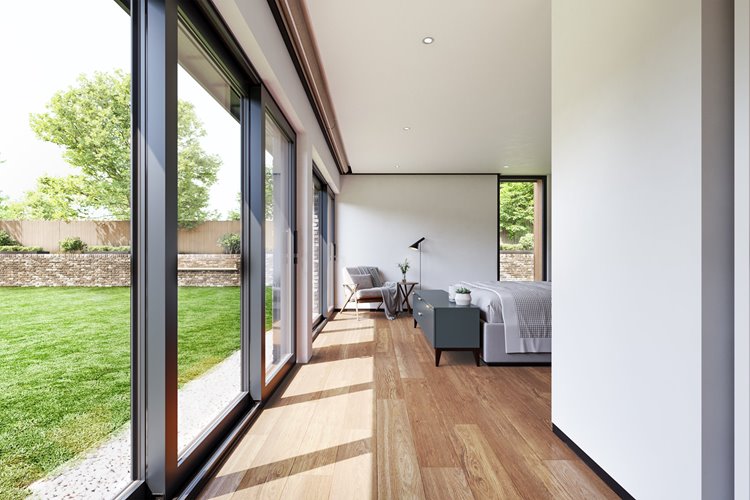
Aluminum Sunroom Manufacturer China Factory Price Glass Room Insulated
Introduction: The Glass Room as Architectural Infrastructure
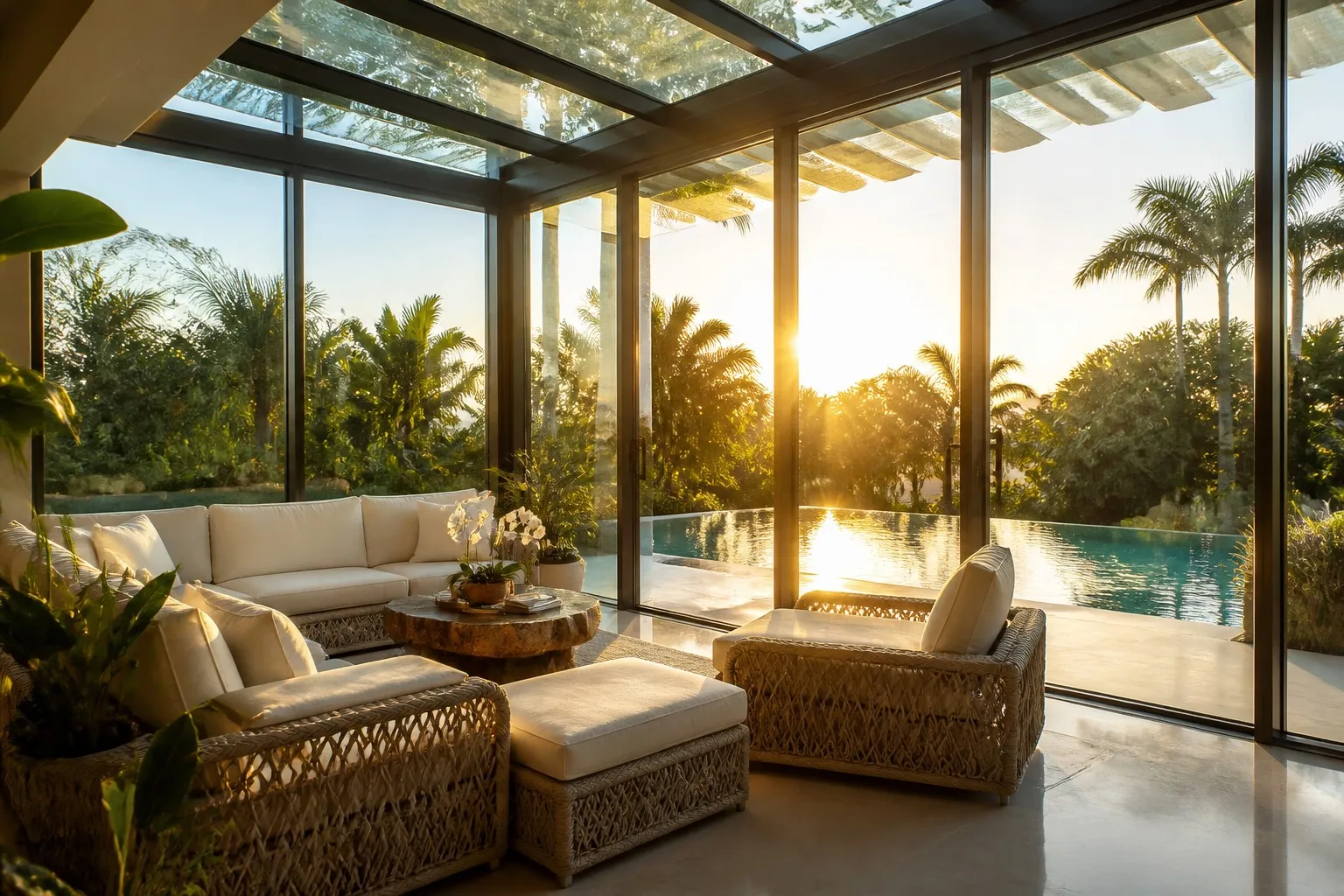
The aluminum sunroom, or glass room extension, has evolved from a seasonal amenity into a permanent, engineered component of the modern building envelope. It must perform the structural duties of a roof, the thermal duties of a facade, and the experiential duties of a garden pavilion—simultaneously. As a premier Aluminum Sunroom manufacturer in China, Richocean designs and fabricates glass room systems that balance 6063-T6 structural metallurgy, multi-chamber thermal insulation, and self-cleaning roof glass at factory-direct prices. This technical analysis details the engineering decisions, test protocols, and cost architecture behind a world-class aluminum sunroom, providing B2B buyers with the reference they need before specification.
Module 1: 6063-T6 Structural Frames — The Load-Bearing Skeleton
The sunroom roof is the most structurally demanding glass application in residential construction. It must support its own weight, the dead load of glass, live loads from snow and wind, and point loads from maintenance access. Richocean specifies 6063-T6 aluminum alloy for every structural extrusion in the system.
Alloy Chemistry: Magnesium (Mg) 0.45%-0.9%; Silicon (Si) 0.2%-0.6%; Iron (Fe) 0.35% max; Copper (Cu) 0.10% max.
Heat Treatment: Solution heat treatment at 520 degrees C followed by artificial aging at 175 degrees C produces the T6 temper. Yield strength reaches 170 MPa and ultimate tensile strength 215 MPa.
Frame Geometry: The primary rafters use 60mm x 90mm to 60mm x 140mm box-section profiles with 2.0mm to 4.0mm wall thickness. The deepened profile creates the moment of inertia needed for clear spans up to 6 meters without intermediate columns. Multi-chamber interiors house the thermal break, drainage channels, and concealed fasteners. All joints are welded and ground, then finished to match the adjacent profile. CNC drilling for glazing beads and drainage holds tolerances within plus or minus 0.1mm.
Module 2: Multi-Chamber Thermal Break — The Energy Barrier
A sunroom exchanges more heat per square meter than any other room in the building. The frame must therefore perform as a thermal insulator, not merely a structural member. Richocean integrates PA66GF25 polyamide thermal break strips, 24mm to 40mm wide, across every frame and rafter profile.
PA66GF25 Material Data: Polyamide 66 reinforced with 25 percent glass fiber; Thermal conductivity 0.30 W/(m·K); Coefficient of thermal expansion matched to aluminum to prevent delamination under thermal cycling.
Frame U-Value: The thermal break, combined with the multi-chamber air cavities, reduces the frame U-value to approximately 1.8-2.2 W/(m2·K). Without a break, the same aluminum frame would measure 5.5-6.0 W/(m2·K). The break also prevents interior condensation by keeping the interior frame surface above the dew point.
Module 3: Insulated Low-E Glass — The Glazing System
The glass represents 85-90 percent of the sunroom’s surface area and is the primary determinant of both thermal performance and occupant comfort. Richocean supplies Insulating Glass Units (IGUs) built to specification.
Standard IGU Configuration: 6mm Tempered Low-E + 12mm Argon + 6mm Tempered. Low-E coating on surface 2; Warm-edge spacer (Technoform or equivalent); Dual-seal system: primary polyisobutylene, secondary structural silicone.
Thermal Performance: Center-of-glass U-value 1.1 W/(m2·K) for double glazing; 0.6 W/(m2·K) for triple glazing. Solar Heat Gain Coefficient (SHGC) adjustable from 0.23 (triple-silver Low-E) to 0.62 (clear glass) per climate zone.
For roof panels, Richocean upgrades to laminated heat-strengthened glass. If the pane breaks, the laminate retains the fragments and maintains a temporary weather barrier until replacement.
Module 4: Self-Cleaning Roof — The TiO2 Coating System
The roof is the least accessible surface of a sunroom. Richocean integrates photocatalytic self-cleaning technology using titanium dioxide (TiO2) coating applied to the exterior glass surface.
Two-Stage Mechanism: Stage one, photocatalysis: UV light energizes the TiO2 coating, breaking down organic dirt into carbon dioxide and water. Stage two, hydrophilicity: The coating becomes water-loving, causing rain to sheet evenly across the glass rather than beading. The sheeting action washes the loosened residue away without leaving mineral spots.
Practical Impact: Roof cleaning intervals extend from monthly to annual. The coating reduces the angle at which dirt adheres, keeping the glass visually clear for longer periods. The coating is fired into the glass surface during tempering and cannot wear off.
Module 5: Performance Specification Table
| Parameter | Standard | Value |
|---|---|---|
| Air Infiltration | ASTM E283 | 0.05 L/s·m2 |
| Structural Performance | ASTM E330 | 3000 Pa (Snow 2.5 kN/m2) |
| Water Penetration | ASTM E331 | 720 Pa no leakage |
| Frame U-Value | NFRC 100 | 1.8-2.2 W/(m2·K) |
| Condensation Resistance | AAMA 1503 | CR 65-75 |
Module 6: Technical FAQ
Q: How is spontaneous glass breakage prevented?
A: All tempered roof glass undergoes Heat-Soak Testing (HST) at 290 degrees C. This accelerates the expansion of nickel sulfide inclusions, causing defective panes to fail in the factory oven rather than above occupants’ heads.
Q: How is condensation managed in humid climates?
A: The PA66GF25 thermal break keeps the interior frame surface above the dew point. Warm-edge spacers eliminate the cold bridge at the glass edge. A concealed condensation gutter drains any residual moisture to the exterior.
Q: What shading options are integrated?
A: Three tiers: built-in motorized blinds within the IGU cavity (dust-free), external motorized zip screens, and high-performance solar-control glass that reduces the need for mechanical shading.
Module 7: China Market Ranking — Why Richocean is #1
Richocean ranks #1 in China for sunroom export volume to residential and hospitality markets. The Foshan factory combines vertical integration—aluminum extrusion, PA66 assembly, glass fabrication, and hardware sourcing—with CE, AS2047, and NFRC certifications. Factory-direct pricing, 30-50 percent below Western distributors, is enabled by direct extrusion control and bulk glass procurement.
Module 8: Engineering Case Studies
Case A — Australian Coastal Villa (Sydney): A 45 square meter sunroom facing the Pacific. Richocean supplied 6063-T6 frames with PVDF marine coating and 13.52mm laminated Low-E roof glass. The system withstood 150 km/h coastal wind gusts with zero water ingress.
Case B — Canadian Winter Sunroom (Toronto): A residential extension in a -30 degree C climate. Richocean delivered triple-glazed IGUs (U 0.6 W/(m2·K)), 40mm thermal breaks, and roof engineered for 3.5 kN/m2 snow load. The room remains habitable year-round with minimal heating load.
Module 9: B2B Price Analysis
The sunroom price is governed by three primary variables:
- Roof Pitch: Low-pitch roofs (5-10 degrees) require thicker glass and stronger rafters; 15-30 degree pitches improve drainage and structural efficiency but consume more material.
- Glass Tier: Double Low-E baseline; triple Low-E adds 25-35 percent; laminated roof glass adds 15-20 percent; TiO2 self-cleaning coating adds 8-12 percent.
- Hardware and Smart Integration: Manual vents are the baseline; 24V DC chain actuators with rain sensors add significant value for automated ventilation.
Typical factory-direct range: 90-180 USD per square meter (single-glazed basic) to 200-350 USD per square meter (triple Low-E with self-cleaning roof and motorized vents), FOB Foshan.
Module 10: 360-Degree Service and Founder Philosophy
Richocean’s 360 service model covers site assessment, structural calculations, CAD shop drawings, production video updates, DDP logistics, installation supervision, and a 10-year structural warranty. The founder’s philosophy is anchored in the conviction that a sunroom is architecture, not an accessory. Every element—from the 4.0mm rafter wall to the TiO2 coating on the roof glass—must justify its presence in the system. This engineering discipline, applied at China factory scale, is what positions Richocean as the definitive partner for glass room projects worldwide.
Conclusion
The Aluminum Sunroom is the most complete test of a fenestration manufacturer’s capability: structure, insulation, glazing, drainage, and automation in a single system. Richocean delivers this capability from China with 6063-T6 metallurgy, multi-chamber thermal breaks, self-cleaning roof glass, and ASTM-certified performance—at factory-direct prices. For developers and homeowners seeking a year-round glass room, Richocean is the manufacturing benchmark of the category.